How to Protect Your IT Infrastructure and Physical Archives with Water Leak Detectors
09 March, 2026
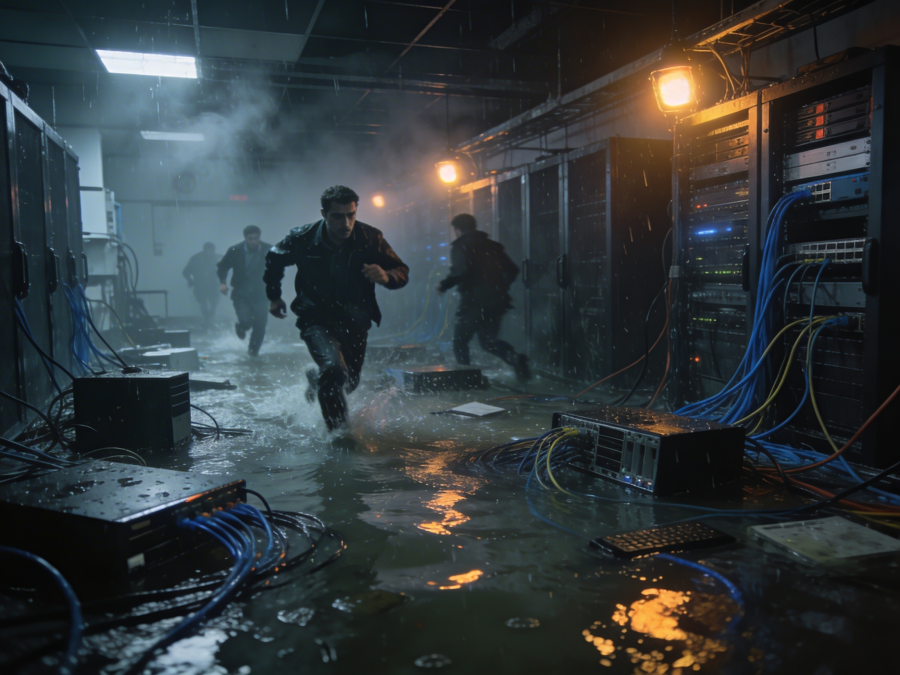
Fire reveals itself through smoke, electrical problems through power cuts. Water leaks, however, progress silently. Water leaking from a cracked pipe or air conditioning unit will reach the lowest point due to gravity. This point is usually the floor beneath raised flooring in server rooms or the floor of archive rooms. By the time it is noticed, it is usually too late. The hardware has short-circuited or critical documents have become unusable.
Human oversight is insufficient for managing risks. Operators cannot continuously monitor the subfloor or pipelines. Water leaks detection technologies keep these blind spots under 24/7 surveillance. Early warning systems detect leaks before they turn into a disaster, when they are still just a few drops.
The Silent Threat of Water: Effects on Electronics and Paper
Water leakage creates different destructive effects depending on the environment it is found in. The nature of risk in a data centre differs from that in a bank archive, but the consequences are equally severe: The common output is Operational blindness and data loss.
Short Circuit and Corrosion Risk in IT Infrastructure
Electronic equipment and water are a combination that should never be allowed to come together. Water causes instant short circuits on circuit boards due to its conductive properties. This leads to power supply units (PSUs) exploding, motherboards burning out, and shutting down of servers.
The danger is not only direct contact. Water accumulating under raised flooring increases the humidity level in the environment uncontrollably over time. High humidity causes corrosion (oxidation) on metal parts and copper tracks. Corrosion causes equipment to become unreliable over time and to fail unexpectedly.
Humidity, Mould and Irreversible Data Loss in Physical Archives
Physical archives are vital for banks, public institutions and libraries. Paper is a hygroscopic material that absorbs water quickly. Flooding in an archive room without a water leak alarm system causes paper fibres to swell and ink to spread.
The greater danger, however, is mould. Wet paper begins to mould within 24 to 48 hours. Mould biologically decomposes documents and poses a threat to human health. Digital data can be backed up, but there is no backup for physical documents of historical or legal significance.
Sensor Technologies: Which Detector Should Be Used in Which Area?
Each risk area requires a different detection strategy. There are generally two types of sensor technology available on the market: point detectors and rope-type sensors.
Point TypeWater Detectors: Specific Risk Points (Under Air Conditioning Units)
Point detectors are placed in specific areas where water is expected to accumulate. When the metal probes beneath the detector come into contact with water, they complete the circuit and trigger an alarm.
Application Areas:
● Drain pans for precision air conditioners (CRAC/CRAH).
● The floor beneath water dispensers or sinks.
● Manholes or pump pits.
These sensors are economical but have a limited detection range. Water must come into contact with the sensor. The sensor cannot detect a leak passing 50 cm to the side.
Liquid Detection Cables (Rope Type): Wide Area Scanning
Rope-type models are preferred as liquid leak sensors for protecting large areas. These sensors consist of special polymer-based conductive cables. The alarm is triggered if any part of the cable comes into contact with water.
Advantages:
● Coverage Area: Cables can be joined together to reach lengths of several meters.● Flexibility: They can be wrapped around pipes or laid on the floor in an "S" pattern.
● Sensitivity: Only a few millimetres of the cable getting wet is sufficient for detection.
Strategic Assembly Points and Regional Monitoring
Placing sensors randomly creates a security vulnerability. The installation plan must be based on the room's hydraulic risk map.
Raised Floor Underlay and Cable Trays
In data centres, cooling pipes and building services typically run beneath raised flooring. This is the area where visual inspection is most difficult. Rope-type water leakage sensor must be installed under the concrete floor, running around the perimeter of the room or passing under pipes at risk. Sensors placed at the lowest level of cable trays detect leaks from the ceiling or upper floor before they reach the cables.
Archive Rooms and Pipeline Routes
Sensors should never be placed on top of shelves in archives. Perimeter protection should be provided at floor level, at skirting board height. If there is a sprinkler (fire suppression) line or clean water pipe running through the room, the sensor cable should be positioned along the route of these pipes.
Leak Detection Automation: Close the Valve, Cut the Power
The most critical factor in a water leak is the response time. In the event of a leak occurring in the middle of the night, it could take hours for personnel to arrive and shut off the valve. During this time, tons of water fill the room. Modern monitoring systems combine detection and action.
The "Wet" signal from the detector reaches the central unit. The system activates the predefined scenario.:
- Solenoid Valve Control: A "Close" command is sent to the main water inlet valve via the relay output. The water supply is cut off within seconds.
- Power Off: To prevent the risk of short circuits, the power to socket groups or PDUs in areas where water has risen is automatically cut off.
- Alarm Notification: The relevant personnel are notified of the location of the leak via SMS and email.
This automation chain turns a potential disaster into a simple cleaning operation. In cases of Data Centre flooding, it is not the speed of the personnel that saves the hardware, but the automation capability of the system.
Frequently Asked Questions (FAQ)
Does the system give a warning when the liquid detection cable breaks?
Yes, professional liquid detection systems feature a "cable break" function. If the sensor cable is physically cut or dislodged, the system detects this as a fault and alerts the user.
At what water level does the flood detector sound the alarm?
The detectors are highly sensitive. Generally, a water accumulation of between 1mm and 3mm on the floor is sufficient for the probes or cable to complete the circuit and trigger the alarm.
Should sensors be placed under the shelves in archive rooms?
Yes, the best places are particularly where the bottom shelf meets the floor and the bottom corners of the room's walls. Water usually flows along wall edges or according to the floor gradient. Sensors placed under the shelves give an alert before water reaches the documents.
Do the sensors detect only water or other chemical liquids as well?
Standard water flood detectors detect conductive liquids (water, acidic water, etc.). Different types of hydrocarbon-sensitive special sensors must be used to detect non-conductive liquids such as oil or fuel (diesel).
How are detectors connected to the environmental monitoring system?
Detectors are usually connected to the main unit via dry contact or digital input ports. Wired connection is the most secure method, but wireless (RF/LoRa) sensors can also be used in areas where it is difficult to run cables.