Cold storage facilities are critical storage areas where food, pharmaceutical raw materials, beverages, agricultural products, chemical substances, and industrial materials are kept within specific temperature ranges. Each product stored in these warehouses has different storage conditions, and it is of great importance to keep environmental conditions such as temperature, humidity, and air circulation under continuous control to protect product integrity.
Particularly in sectors requiring cold chain management — such as food production and distribution, retail logistics, pharmaceutical storage, meat and dairy facilities — monitoring warehouse conditions directly affects not only product quality but also legal compliance and customer trust.
Food safety standards such as HACCP (Hazard Analysis and Critical Control Points), ISO 22000, and FSSC 22000 mandate that cold chain processes be continuously monitored, recorded, and auditable. FSSC 22000 is an international certification program built upon ISO 22000 that defines additional requirements specifically for food production facilities; it requires continuous recording of cold chain data in prerequisite programs and hazard analyses. Therefore, cold storage facilities are expected to have not only instantaneous temperature measurement but also continuous data recording, alarm management, and retrospective reporting infrastructure.
Continuous monitoring of temperature and humidity conditions in cold storage facilities is indispensable for preventing product loss, protecting cold chain integrity, and meeting audit requirements.
In many businesses, cold storage facilities are still monitored through periodic manual checks. However, checks performed a few times a day only reflect the status at the moment of measurement. With today's technology, organizations now prefer to track warehouse conditions instantaneously through centralized monitoring systems instead of these methods. Thus, potential risks can be detected at an early stage, preventing product loss and operational disruptions.
Moreover, not every warehouse requires the same conditions. Both temperature thresholds, alarm scenarios, and intervention times differ between an area where frozen foods are stored and a fresh product section requiring maintenance in the +2/+8°C range. In warehouses where chemical substances or high-value products are stored, additional security and access controls also come into play. Therefore, it is necessary not only to measure temperature but also to know when the deviation started, how long it lasted, and who was notified when.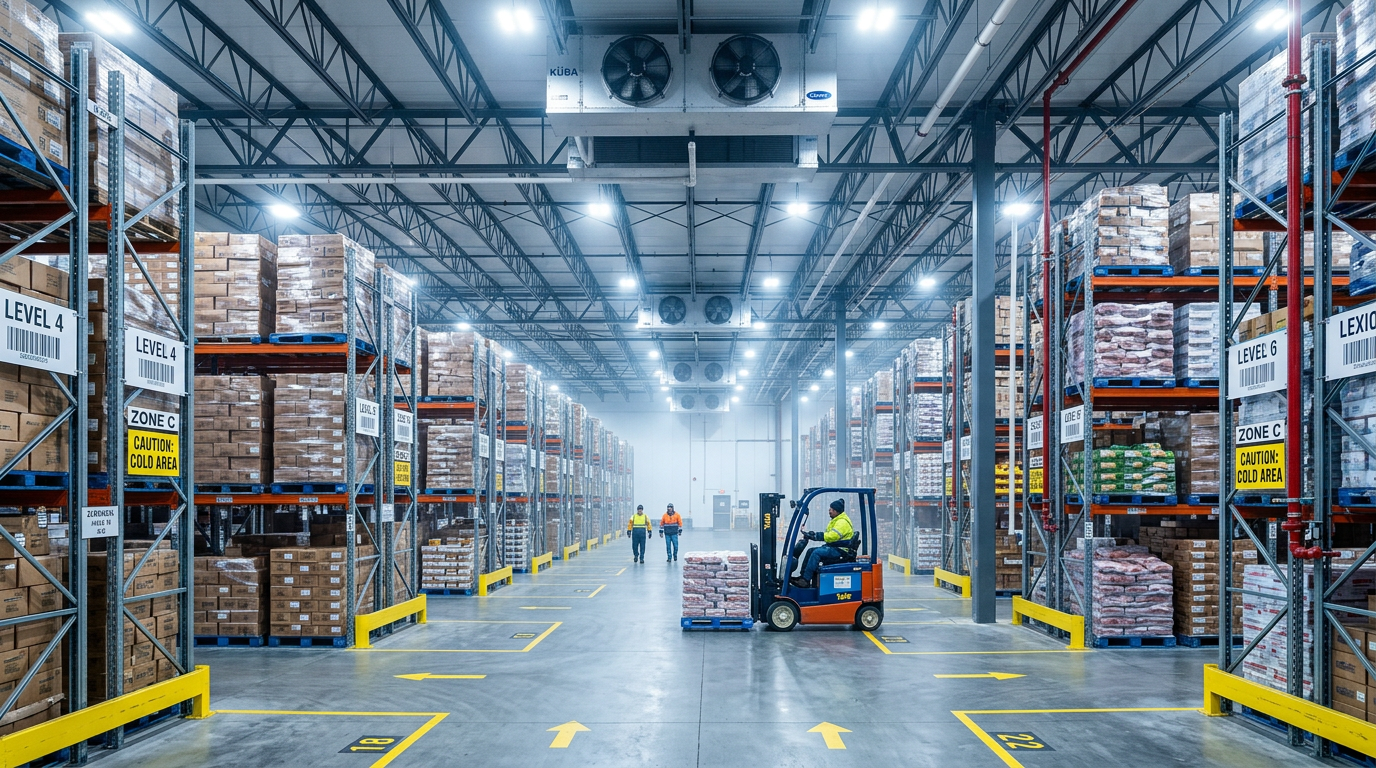
Key Risks Encountered in Cold Storage Facilities
Power Outages
Power outages are one of the most critical risks for cold storage facilities. Cooling systems go offline, particularly in warehouses where frozen foods and chemical substances are kept, which can cause serious financial losses in a short time. Therefore, it is of great importance to monitor the power status instantaneously and notify the relevant persons quickly.
Cooling Systems and Air Conditioning Failures
The basic operating principle of cold storage facilities depends on continuously operating cooling systems. In the event of a possible compressor or air conditioning failure, temperature values inside the warehouse can rise rapidly, leading to product spoilage. Therefore, cooling performance must be tracked via centralized software and failures must be notified through email, SMS, or calls in addition to visual warnings.
Warehouse Doors Left Open
Doors remaining open for a long time can cause the internal temperature to change rapidly and exceed the capacity of cooling systems. Especially in warehouses where chemical substances or high-value products are stored, monitoring doors, giving automatic warnings in case of open doors, and being able to control them remotely when necessary is a critical requirement.
Sudden Temperature Changes
Sudden temperature changes occurring inside the warehouse pose a great risk, especially for frozen foods and chemical products. Such changes can often progress unnoticed. Thanks to sensors placed in the environment, temperature and humidity values are continuously monitored, and possible changes are instantly notified to the relevant personnel.
Human Errors
Human errors such as leaving doors open, not performing necessary checks, or incomplete application of procedures can jeopardize product safety. Through centralized monitoring systems, situations such as exceeding determined threshold values are automatically detected and notified to the relevant persons, ensuring that processes are kept under control.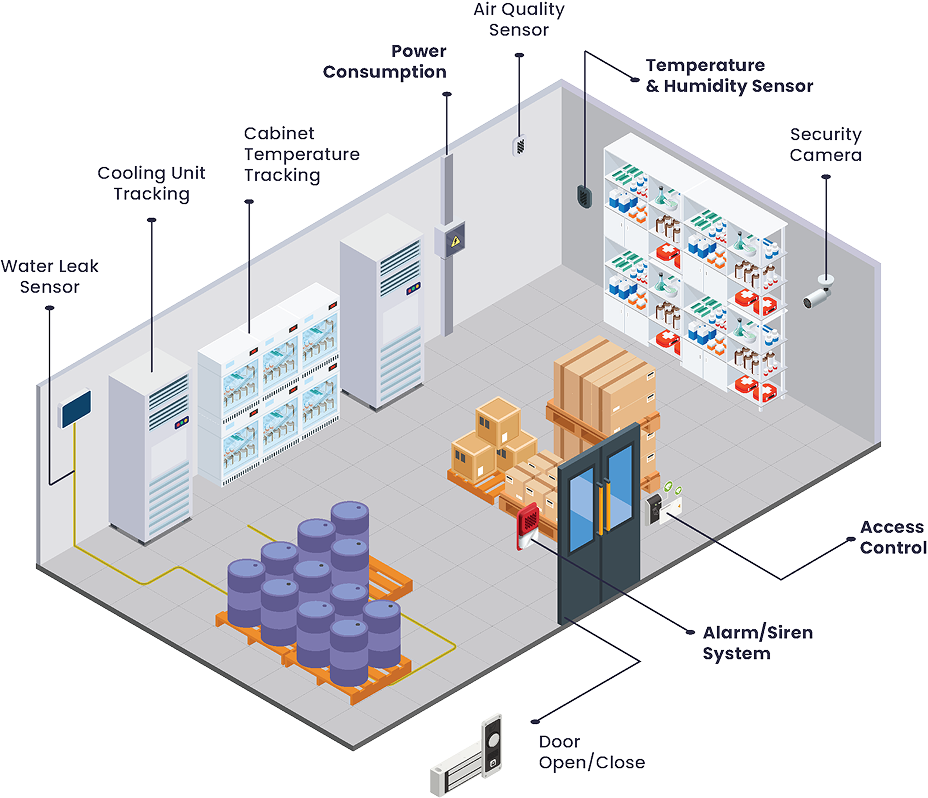
What Does Birtech Provide in This Area?
End-to-end solution from hardware to software, from alarm management to after-sales support:
Field-Proven Hardware
BirSens sensors and control modules developed for critical environments stand out with features such as easy installation, low failure rates, and high reliability. Thanks to the integration of software and hardware, the system operates end-to-end with Birtech assurance.
Every Parameter on a Single Screen
Temperature, humidity, door status, and power presence are monitored simultaneously with Sensaway and Noctua. All data is recorded with date and time stamps; it can be queried at any time retrospectively.
To the Right Person, at the Right Moment
Notification flows via email, SMS, and calls are created for situations such as threshold exceedance, power loss, or open doors. Different alarm scenarios can be defined for each warehouse section.
Time-Based and Seasonal Alarm Rules
Custom rule definitions can be made for specific hours and days to prevent unnecessary alarm density during planned operations such as loading, defrosting, or maintenance. A deviation that might remain at a warning level during working hours can be escalated to a critical alarm during night hours. Likewise, different temperature thresholds can be determined for summer and winter periods, ensuring alarm management compatible with seasonal conditions.
Smart Rules with Super Sensor
Logical alarm scenarios combining multiple conditions can be defined via Noctua software. For example: "If the cold room door has been open for more than 5 minutes AND the internal temperature has risen above -18°C, GIVE CRITICAL ALARM" — with such rules, unnecessary notifications are prevented, and only real risks generate alarms. Similarly, compressor failures are detected early by establishing multi-condition scenarios like "If the temperature has still not dropped to the target value 15 minutes after the defrost period ends, CALL the technical team."
Door Control Remotely in Your Hands
Door open durations are tracked with sensors, and automatic warnings are generated when the determined duration is exceeded. Remote control capability is also provided in warehouses where high-value products are stored.
2D Visualization and Heat Map
Warehouse areas can be visualized in 2D with Noctua. Instead of complicated tables, in which region an alarm occurred is understood directly via the visual screen. Furthermore, preventive intervention is enabled by identifying hotspots and areas where air circulation is insufficient through the heat map.
Control is Yours Even When in the Field
With Android and iOS applications, you can receive instant notifications from anywhere, view the status of all warehouses, and quickly access basic reports.
Ready When the Audit Comes
Retrospective reports for HACCP, ISO 22000, and FSSC 22000 audits are automatically generated. Sensor reliability can be documented with TURKAK-accredited calibration certificates.
Support That Ensures Continuity
Maintenance, calibration and support services provided under SensCare® protect the operational continuity of systems. Continuous support is provided for critical infrastructures.
Reliability Is Proven in the Field
The indicator of the right solution in cold chain management and critical storage areas is its continuous use in the field for years and maintaining the trust of users. Birtech actively serves in a wide range from food production facilities to logistics warehouses, from retail chains to industrial cooling areas.

Let Us Determine the Right Solution for You Together
Let us create a special system architecture according to the number of warehouses, monitoring points, and audit needs. Submit your request, and our team will contact you within the same day in most cases, within 24 hours at the latest.