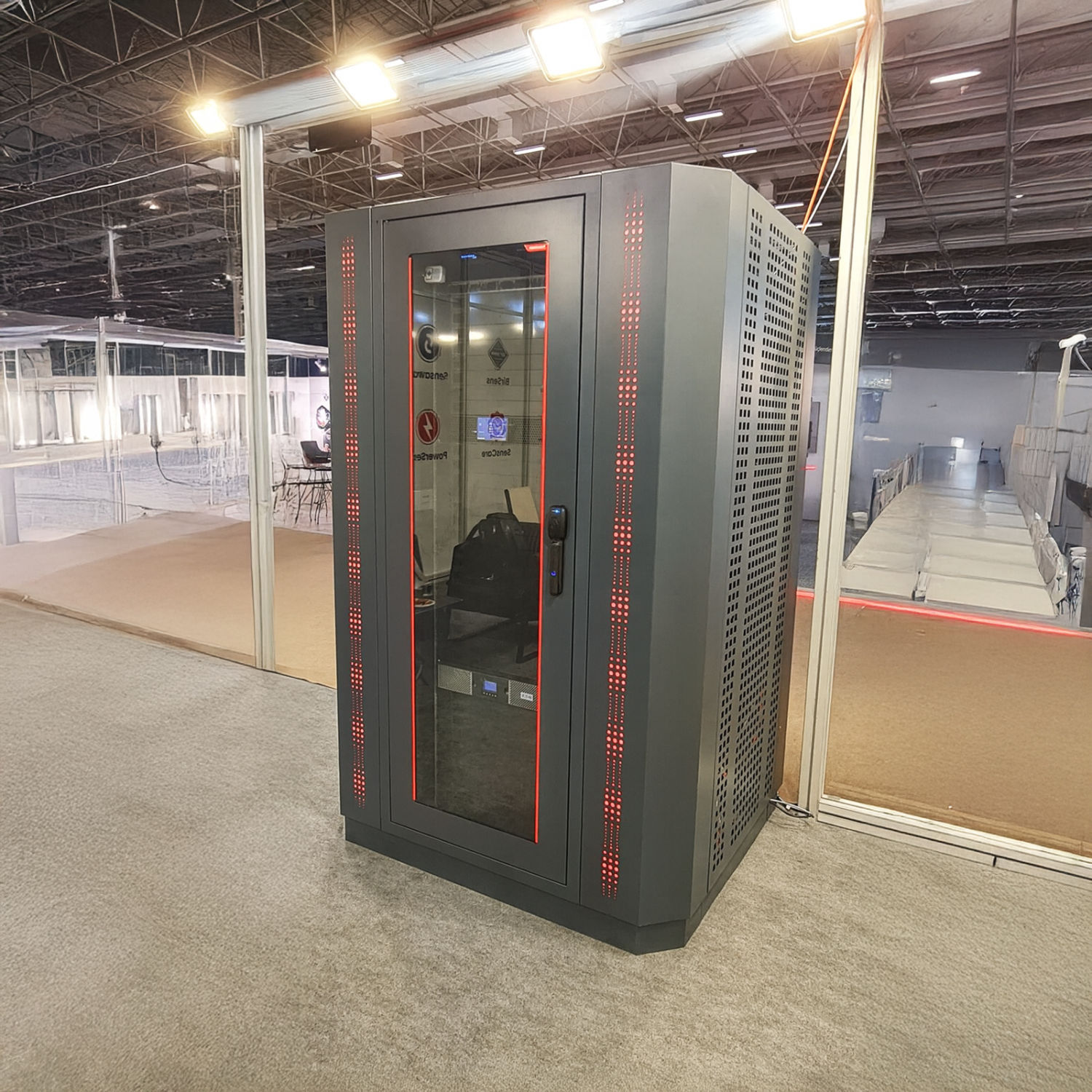
Micro Data Centers (Micro DC) are modular IT infrastructure solutions that bring together traditional data center infrastructure in a compact form within a single cabinet or a few cabinets, offering rapid deployment and portability advantages. Housing servers, network equipment, UPS, cooling systems, and physical security components in an integrated structure, these systems deliver critical IT services on-site at locations where traditional data center deployment is not feasible, such as branch offices, manufacturing facilities, retail stores, telecommunications stations, and remote field locations.
With the rapid growth of edge computing needs, Micro Data Centers have gained strategic importance. IoT applications requiring low latency, AI-based real-time analytics, local data processing requirements, and data sovereignty needs are making it essential to bring processing power to the point where data is generated. However, these compact structures also bring unique challenges including intense heat generation within limited space, constrained cooling capacity, operation in remote and unmanned locations, and limited physical access.
Noctua software and BirSens hardware continuously monitor all critical parameters in Micro Data Centers remotely, including temperature, humidity, UPS status, energy consumption, cooling system performance, water leakage, and physical access. Instant notifications are sent when thresholds are exceeded and historical data is reported. This enables IT managers to keep Micro DC infrastructures across distributed locations under control through a centralized platform, detect issues without traveling to the site, and coordinate the intervention process.
In Micro Data Centers, the intense heat load within compact spaces, limited cooling capacity, and unmanned operating conditions make 24/7 remote monitoring of environmental parameters and critical infrastructure components mandatory.
Micro Data Centers are typically deployed in remote locations where IT personnel are not present. Operating next to a factory production line, in a retail store back room, at a telecommunications base station, or on a hospital floor, these systems must maintain high uptime without the possibility of continuous on-site supervision. Therefore, not only environmental monitoring but remote control of all infrastructure components, including UPS, cooling, power distribution, and physical security through a centralized platform, is an operational necessity.
Furthermore, managing Micro Data Centers distributed across multiple locations under a consistent monitoring standard, enabling proactive maintenance planning without requiring separate physical intervention at each one, and optimizing energy consumption on a per-location basis makes a scalable and centralized monitoring infrastructure a strategic requirement.
Key Risks in Micro Data Centers
Overheating in Compact Spaces
In Micro Data Centers, heat-intensive components such as servers, network equipment, and UPS units are packed into extremely limited volumes. If a single cooling unit fails or has insufficient capacity, cabinet temperatures can reach critical levels within minutes. Since the hot/cold aisle arrangement found in traditional data centers is not possible in these structures, hotspot formation and air circulation imbalances are the most common thermal issues.
Power Continuity and UPS Risks
Micro Data Centers are typically deployed at locations with more limited power infrastructure compared to main data centers. In areas with poor grid quality, voltage fluctuations, brief outages, and harmonic distortions occur frequently. The limited battery capacity of compact UPS units, absence of generator backup, or inadequate ATS infrastructure can cause the entire service to stop abruptly during power outages.
Cooling System Constraints
Cooling systems in Micro Data Centers typically consist of a single unit with no redundancy (N+1). When the cooling unit fails, its filters become clogged, or outdoor temperatures rise, cabinet temperatures can rapidly increase, leading to equipment throttling, performance degradation, and hardware damage. Continuous monitoring of cooling capacity relative to IT load is vitally important in these structures.
Humidity and Water Leakage
Micro Data Centers are directly affected by the environmental conditions of their deployment location. High humidity in manufacturing facilities, groundwater seepage in basements, condensation water accumulation from cooling units, or leaks from adjacent plumbing can cause short circuits, corrosion, and hardware damage within the compact structure. Early detection of water leakage is critically important due to the limited space.
Physical Security and Unauthorized Access
Micro Data Centers mostly operate in unmanned locations where IT personnel are not present. This increases physical security risks: unauthorized cabinet access, doors left open, and intentional or accidental interference threaten both data security and hardware integrity. Remote monitoring of door access management, access control, and camera integration is a mandatory security layer in these structures.
Remote Management and Accessibility Challenges
Physical access to Micro Data Centers distributed across multiple locations is typically time-consuming and costly. Dispatching a technical team to the site during a failure can take hours; during this time, the scope of the problem can escalate. The lack of remote visibility into the infrastructure at each location leads to being confined to reactive intervention and inability to perform planned maintenance.
Fire and Smoke Risks
The coexistence of intense electrical loads in a compact structure, cable congestion, dust accumulation, and inadequate ventilation are factors that increase fire risk. In unmanned environments, a fire or smoke occurrence can grow unnoticed. Through continuous monitoring of particle density and temperature rise trends with air quality sensors, fire risk can be detected at an early stage.
What Does Birtech Provide in This Area?
End-to-end solution from hardware to software, from compact infrastructure monitoring to distributed location management:
BirSens Hardware Family Suited for Compact Structures
Designed for the limited space of Micro Data Centers, the BirSens hardware family includes control modules, high-precision temperature/humidity sensors, point and strip water leak sensors, door contact sensors, air quality sensors, and compact camera solutions. It provides an infrastructure that occupies minimum space while offering maximum monitoring capacity. Multiple sensors can be connected through a single control module, reducing cabling complexity.
Vendor-Independent Critical Infrastructure Integration
Noctua software collects data from critical infrastructure components used in Micro Data Centers, such as UPS, air conditioning, PDU, and energy analyzers, regardless of brand or model, enabling monitoring of all through a single platform. Compact devices from different manufacturers are unified in a common infrastructure, providing a holistic and standardized control experience for each Micro DC location.
Multi-Location Management
All Micro Data Centers distributed across multiple locations are centrally monitored and managed through a single Noctua platform. Each location status, alarm history, energy consumption, and maintenance needs can be viewed comparatively from a single screen. Consistent monitoring standards are applied across locations, eliminating the management complexity of distributed infrastructure. When a new Micro DC location is commissioned, it can be added to the monitoring infrastructure within minutes using existing templates.
Dashboard Module
Provides an advanced visualization structure where users can fully customize their monitoring screens. With drag-and-drop panels, the status of all Micro DC locations can be displayed as a summary on a single dashboard, or detailed monitoring screens can be created for each location. Sensor data, event reports, live camera feeds, and operational information are presented together on the dashboard, making the entire distributed infrastructure visible.
Super Sensor
Enables users to create their own virtual sensors using existing sensor data. Through a drag-and-drop interface that requires no coding knowledge, data from multiple sensors can be combined with mathematical or logical operations. Cross-correlation scenarios particularly critical in Micro Data Centers can be easily defined. For example: "If cabinet internal temperature exceeds 35°C AND the cooling unit compressor is not running, CREATE CRITICAL ALARM, CALL the on-duty technical team and NOTIFY the spare parts inventory at the nearest location" — such multi-condition scenarios can be created within minutes.
Inventory Management
Ensures that physical assets at each Micro DC location are organized, traceable, and manageable through a single platform. Servers, network equipment, UPS, cooling units, and sensors can be defined in detail; warranty certificates, user manuals, and maintenance reports can be attached to each inventory record. The module visually displays the physical positions of devices within the cabinet in front and rear views; remote technicians can examine the cabinet layout without traveling to the site.
Energy Cost Management
Provides single-screen monitoring of energy consumption, costs, and efficiency ratios for each Micro DC location. Consumption is tracked by location, device, or category through energy analyzers and PDUs; energy costs can be reported in both kWh and monetary terms. Cross-location energy consumption comparisons can be made; inefficiently operating Micro DCs can be identified for optimization measures. Daily, weekly, or monthly target cards can set consumption limits; the system sends automatic notifications when targets are exceeded.
Physical Security Management Module
Combines access control, monitoring, and security event management in a single platform for Micro Data Centers at unmanned locations. With the Integrated Door Security feature, door sensors, access control devices (card or biometric), and cameras can be added to cabinet doors. When a door is opened, the system evaluates these components as a single event and produces a single notification. Instant alarms and camera recordings enable remote intervention during unauthorized access attempts. Shift definitions allow access only for authorized personnel during designated time periods.
Notification Efficiency and Optimization
Prevents notification pollution for teams managing multiple Micro DC locations by ensuring only important and actionable notifications are delivered. With decreasing notification frequency over time, delivery intervals for ongoing events automatically become less frequent. Location event summaries provide a single periodic summary notification covering all open events instead of separate emails for each location. Newly occurring critical events are sent as immediate individual notifications.
2D Visualization and Location Map
Noctua enables 2D visualization of Micro Data Center cabinet layouts and distributed locations. Temperature distribution within cabinets, equipment positions, and alarm states can be monitored directly from the floor plan. The overall status of Micro DCs across multiple locations is displayed on a map or facility plan, enabling instant identification of problem locations and determination of intervention priorities.
24/7 Remote Access and Mobile Control
With Android and iOS applications, you can view the real-time status of all Micro DC locations from anywhere, receive critical alarm notifications instantly, and quickly access basic reports. When a critical alarm arrives from a Micro DC at a remote location during night hours or weekends, you can evaluate the situation from your phone, check the in-cabinet camera feed, and coordinate the necessary intervention without traveling to the site.
Audit and Compliance Reporting
Historical environmental conditions, energy consumption, and physical access reports can be easily generated for each Micro DC location. Documents required by compliance frameworks such as ISO/IEC 27001, PCI DSS, and SOC 2 can be produced through the centralized platform. Sensor reliability can be documented with TURKAK-accredited calibration certificates.
Support That Ensures Continuity
Maintenance, calibration, and support services provided under SensCare® protect the operational continuity of systems at your distributed Micro DC locations. Hardware maintenance, calibration renewals, and fault interventions at remote locations are performed on-site by SensCare teams.
Reliability Is Proven in the Field
From telecommunications to the financial sector, from retail to industrial facilities, Birtech infrastructure serves continuously in Micro Data Centers across a wide spectrum. Systems operating in the field for years are the most concrete proof of reliability.



Let Us Design the Solution Tailored to Your Needs
Let us create a custom monitoring system based on your Micro Data Center location count, cabinet structure, cooling architecture, and remote management requirements. Submit your request, and our team will contact you within the same day in most cases, within 24 hours at the latest.