Airflow management separates cold and hot air inside a server room physically, which stops cooling capacity from being wasted. Hot aisle containment and cold aisle containment are the two architectural approaches that create this separation. Air that does not mix supports a larger IT load at the same cooling capacity and lowers the risk of hot spots inside the rack.
This article explains how the hot aisle and the cold aisle work. It compares hot aisle containment (HACS) against cold aisle containment (CACS). It shows how containment is planned while a data center is built from the ground up. The measurement section covers how containment performance is verified.
What Is Airflow Management and Why Does It Matter?
Server cabinets draw cold air from the front and exhaust hot air from the rear. In a room without containment, these two air streams mix freely. Cooled air mixes with hot air before it reaches the server. Hot air leaks back into the cold aisle. This mixing (bypass and recirculation) consumes part of the cooling capacity without cooling any server.
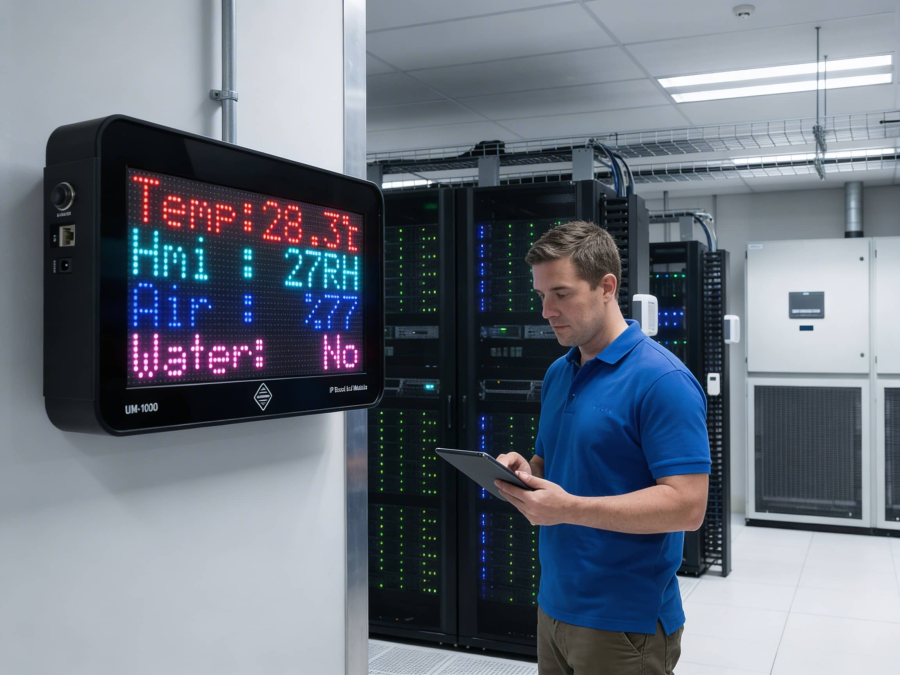
Temperature and humidity sensor solutions make the mixing measurable: the temperature difference between the rack inlet and the general room shows directly whether containment works.
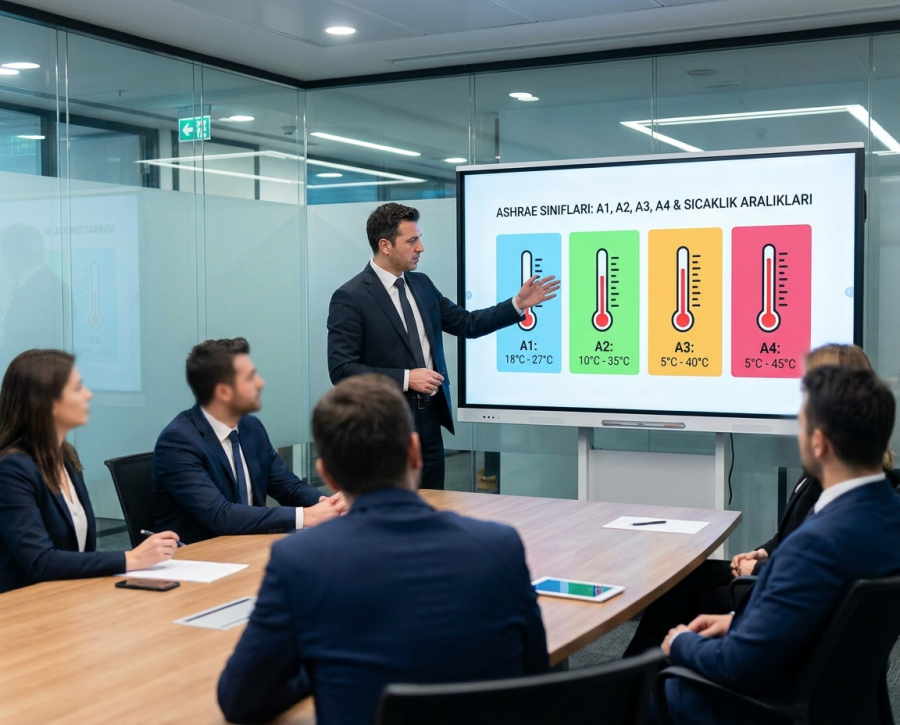
Correct airflow management delivers three results together. The temperature gradient inside the rack drops. The cooling system can run at a higher supply temperature. Compliance with the recommended envelope of the ASHRAE A1–A4 classes becomes easier. Server room temperature is not evaluated as a single room average; it is measured separately at each rack inlet. Containment brings these point values closer together.
Hot Aisle Cold Aisle Layout Fundamentals
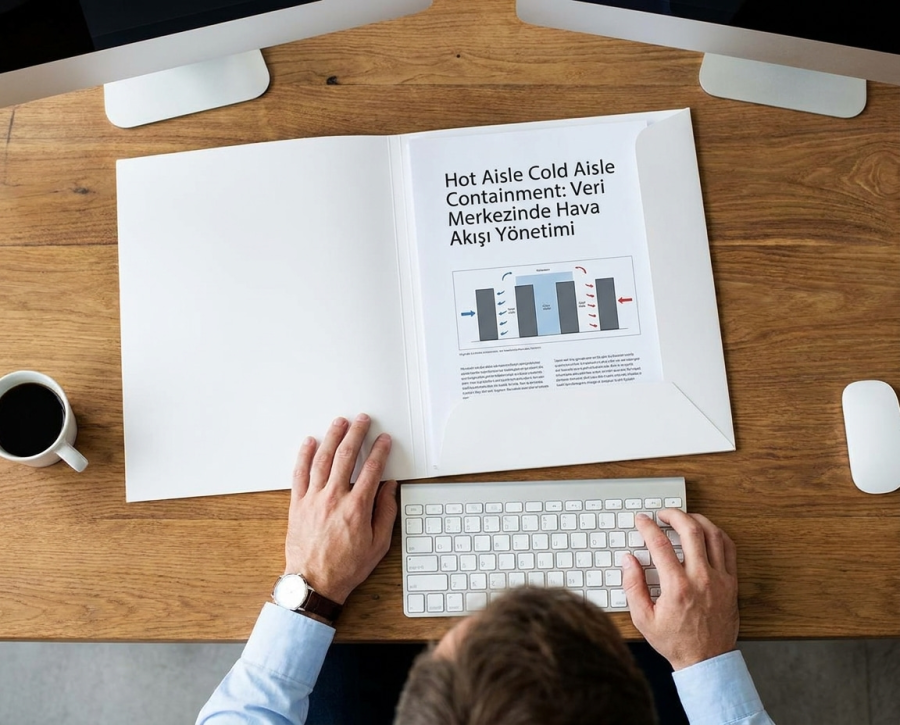
The hot aisle cold aisle layout places cabinet rows in alternating directions: one row faces another row front to front, and the aisle between them stays cold. The rear faces of the cabinets face each other, and the aisle between them stays hot. This arrangement separates cold and hot air at the source.
Raised Floor and Perforated Tile Placement
The plenum under a raised floor acts as a duct carrying cold air from the CRAC/CRAH (computer room air conditioner and air handler) unit. Perforated tiles are placed only in the cold aisle. A perforated tile placed in the hot aisle sends hot air straight back into the floor plenum and lowers cooling efficiency. Tile count and open area ratio are calculated against the total cabinet load in that aisle.
Blanking Panel Use
An empty U space (rack height unit) left inside a rack creates an open path for hot aisle air to leak through the cabinet into the cold aisle. A blanking panel closes this gap and keeps airflow on the front-to-rear axis of the cabinet. A single empty U causes a measurable temperature loss even when the rest of the containment is built correctly.
Hot Aisle Containment (HACS) and Cold Aisle Containment (CACS) Comparison
HACS and CACS reach the same goal by two different routes: one encloses the hot aisle, the other encloses the cold aisle. The choice depends on staff density in the room, the fire suppression system type, and the infrastructure of the existing facility.
What Is Hot Aisle Containment (HACS)?
Hot aisle containment encloses the hot aisle from above and at the ends, then routes the hot air the cabinets exhaust straight into the CRAC/CRAH return path. The room volume outside the enclosed area stays cold, which is why HACS suits server rooms where staff work continuously. Because it needs a return duct, the initial installation cost runs higher than cold aisle containment.
What Is Cold Aisle Containment (CACS)?
Cold aisle containment encloses the cold aisle with a ceiling panel and end doors, then holds the cold air from the CRAC/CRAH unit inside the enclosed aisle only. The rest of the room volume stays hot. Adding it to an existing facility is easier than HACS, which is why retrofit projects choose it often.
CRAC/CRAH Placement and Containment Interaction
The placement of CRAC/CRAH units cannot be planned separately from containment design. The unit is positioned to push air into the cold aisle over the shortest distance; a long under-floor run causes pressure loss and uneven tile output.
The Difference Between CRAC and CRAH
CRAC (Computer Room Air Conditioner) is a computer room air conditioning unit. It produces cooling with the refrigerant circuit inside its own body and runs independently. CRAH (Computer Room Air Handler) is a computer room air handling unit. It does not produce cooling itself; it uses chilled water from a central plant through a heat exchanger.
The choice depends on facility scale. CRAC units suit small server rooms and facilities without a central chilled water infrastructure. CRAH units require a central chiller plant; in large data centers this central structure delivers an energy efficiency advantage.
Rack Temperature Gradient and By-pass Air
A rack temperature gradient measured without containment reaches several degrees between the bottom unit and the top unit. Hot air rises toward the upper shelves. Equipment on the top shelf therefore runs at a higher inlet temperature.
Effective containment reduces this gradient. It cuts two leak paths at the source. The first is by-pass air, meaning hot air that mixes into the cold aisle. The second is recirculation, meaning hot air that escapes from the cabinet rear back to the front.
Containment Design in a Ground-Up Data Center Build
The containment decision is made at the design stage, not after a facility enters service. Floor height, CRAC/CRAH capacity, cabinet row orientation, and fire suppression system type are linked; when one changes, the others are recalculated.
Selecting the Cooling System
The cooling system itself must be selected correctly before the containment architecture is built. Doğuş covers this ground in two Turkish-language articles. What air conditioning is explains why data center temperature has to stay under continuous control. It also shows how air conditioning systems affect energy costs. Data center cooling solutions compares which cooling method fits a given facility size and floor plan.
Turnkey Design and Modernization
When a data center is built from the ground up, containment, the floor system, and the cooling infrastructure are designed together. The data center solutions service from Doğuş covers this process, from turnkey design and installation to modernizing existing facilities without downtime. Birtech supplies the environmental monitoring layer built on top of that infrastructure; the physical installation of containment and cooling architecture is a separate field of expertise.
Verifying Containment Performance Through Measurement
Containment performance cannot be verified without measurement after installation. The BS-2S Temperature Sensor measures -40°C to +70°C at 0.5°C accuracy and, placed at the aisle inlet, shows how sharp the cold-to-hot separation actually is. The BS-2SN Temperature and Humidity Sensor takes the same measurement together with humidity data. The BS-2AF Air Flow Sensor monitors airflow at perforated tile outlets or at gaps in containment panels.
Setting Alarm Thresholds Per Aisle
A separate threshold is defined for the cold aisle and the hot aisle; a single room-wide threshold hides the difference between aisles. Sensaway Monitoring and Management Software tracks each measurement point separately and raises an early warning when the aisle inlet temperature approaches the upper limit of the ASHRAE recommended envelope. The environmental monitoring for data center infrastructure management page shows how this monitoring layer integrates into a data center project.
Frequently Asked Questions
What is the main difference between hot aisle containment and cold aisle containment?
Hot aisle containment encloses the hot aisle and routes hot air straight into the CRAC/CRAH return path; the room volume stays cold. Cold aisle containment encloses the cold aisle and holds cooled air inside the enclosed area only; the room volume stays hot. HACS suits staff comfort better, while CACS is easier and cheaper to add to an existing facility.
Why are blanking panels necessary?
An empty rack U space opens a direct path for hot aisle air to leak through the cabinet into the cold aisle. A blanking panel physically closes this gap and keeps airflow on the front-to-rear axis of the cabinet. A single missing blanking panel causes a measurable temperature loss even when the rest of the containment is built correctly.
How does a containment system affect ASHRAE temperature envelope compliance?
The 18–27°C envelope ASHRAE recommends is evaluated against the actual temperature at the rack inlet, not against the room average. Containment keeps rack inlet temperature predictable by blocking by-pass air and recirculation. That predictability lets the cooling system move its supply temperature closer to the upper limit of the ASHRAE envelope and increases free cooling hours.
Can containment be added to an existing server room later?
Yes. Cold aisle containment in particular can be retrofitted to existing facilities. Adding a ceiling panel over the aisle and doors at the ends does not require changing the floor or the CRAC/CRAH layout. Hot aisle containment requires a return duct, so it demands more construction work in an existing facility.
Which sensors are needed to measure airflow?
A temperature and humidity sensor placed at the aisle inlet shows how well containment holds the cold-to-hot separation. An air flow sensor placed at a perforated tile outlet or at panel gaps detects unexpected leak points. Used together, the two measurements track containment performance across both temperature and airflow.
Pre-Installation Checklist
Complete the following steps before containment installation begins:
- Plan the rack layout with cold aisles front to front and hot aisles rear to rear.
- Fit blanking panels into empty rack U spaces.
- Calculate perforated tile count and open area ratio against the total cabinet load in the aisle.
- Decide between HACS and CACS based on staff density in the room and fire suppression system compatibility.
- Place temperature, humidity, and airflow sensors at the aisle inlet.
- Request a quote from a specialist solution partner for the physical installation of containment and the cooling system.
This content draws on field experience from data center and server room environmental monitoring projects. The air conditioning and containment architecture sections reference material published by Doğuş, our solution partner specializing in data center design and installation. Measurement values come from the BS-2S and BS-2SN datasheets. Reference standard: ASHRAE TC 9.9 A1–A4 Equipment Classes.