A motion sensor is a key security component that detects movement within an area and transmits this information to the monitoring system. Physical security in a server room is not ensured solely by environmental data such as temperature and humidity; it is also essential to be able to clearly answer the question: ‘Who entered, when and where?’ Unauthorised access, movement outside working hours and cabin interference pose risks that are at least as serious as an environmental fault.
Birtech designs the physical security of server rooms using a layered architecture. Whilst the BS-CAM Motion-Detecting IP Camera handles motion detection, physical entry and door status are monitored in real time by access control devices using the BS-2023 Industrial Door Sensor. All these layers are consolidated into a single, unified event management dashboard for centralised management, authorisation and monitoring within the Sensaway and Noctua software. BIn this article, we will examine how motion detection works, which products cover which layers, and how the data is transformed into a meaningful security event.
Why is Physical Security in the Server Room Critical?
The server room houses an organisation’s most valuable digital assets. Physical access to this area is the first and most important gateway to critical data. In a room where physical security is weak, even the strongest cyber security measures will prove inadequate. Physical security vulnerabilities essentially give rise to three major threats:
- Unauthorised access: If an unauthorised person enters the room, this poses a risk of equipment theft, sabotage or a direct data breach.
- Interference from within: An authorised member of staff touching a cabinet or piece of equipment outside their area of responsibility is the actual cause of many incidents in data centres.
- Lack of evidence: When events are not recorded with a time stamp and visually, it becomes impossible to carry out retrospective audits and forensic investigations.
Motion detection and access monitoring systems completely eliminate all three of these critical threats. The system detects movement instantly, verifies it using live footage and permanently records the incident. Among the critical sensor types in the server room, the physical security layer serves as an independent monitoring circuit that fully complements environmental monitoring.
How Do Motion Sensors and Motion Detection Work?
Motion detection technology is based on various methods of detecting physical changes within an area. Two main approaches are commonly used in industry:
PIR (Passive Infrared) motion sensor: It detects sudden changes in ambient temperature. A situation is detected when infrared radiation emitted by the human body moves within the sensor’s field of view. PIR sensors are a cost-effective solution for simple presence detection; however, they do not produce visual evidence of past events and cannot distinguish what is moving.
Camera-based motion detection: It digitally analyses changes in the image frames (pixels). Recording begins the moment movement is detected within a defined area, and visual evidence is generated. This advanced approach combines both detection and verification in a single device.
Birtech relies on advanced camera-based motion detection for the physical security of server rooms. The BS-CAM Motion-Detection IP Camera generates visual evidence at the same time as it detects movement. This method combines ‘motion detected’ data with information on ‘who, when and where’, making the incident directly verifiable.
BS-CAM Motion-Detection IP Camera
The BS-CAM Motion-Detection IP Camera: is an IP-based security camera featuring high-resolution motion detection and powerful night-vision capabilities. Thanks to PoE (Power over Ethernet) support, it transmits both power and data via a single network cable, thereby significantly simplifying installation processes. When the camera detects movement within its field of view, it automatically takes a photograph, stores the image on a secure server and instantly sends an email to designated authorised users via the management software.
| Feature | Value |
|---|---|
| Operating Voltage | 12V / PoE |
| Type | IP67 Dome |
| Resolution | 1920 × 1080 (1080p) |
| Night Vision | IR, 30 meters |
| Product Code | BS-CAM |
Spatial and Temporal Scenario
Location- and time-based scenario configurations prevent cameras from generating unnecessary recordings and filling up storage space. Motion detection scenarios are flexibly defined for specific critical areas and specific time periods within the system room. Recording only begins when these conditions are met. For example, whilst movement detected in the server room outside working hours is considered a high-priority critical event, routine movements during working hours are treated as normal by the system. This intelligent approach reduces the volume of recordings, allowing you to archive only the significant moments.
Night Vision and Visual Reporting
Thanks to its powerful Night Vision (IR) technology, the BS-CAM camera can produce clear images even in completely dark environments at distances of up to 30 metres. As server rooms are generally areas where the lighting is kept dim or switched off, this feature enables evidence to be produced without the need for an external light source. The Sensaway and Noctua software programmes record all entry and exit movements, along with chronological images, by generating automatic illustrated reports for specified time periods.
Live Viewing and NVR Integration
Once any detected movement has been reported to authorised staff, users can instantly access the camera’s live feed via the Noctua mobile app and monitor the situation in real time. The camera also supports existing NVR integration; When the continuous video recording is required by scienario, it takes place whilst the motion detection alert continues to run in the background.
Layered Physical Security: Door Sensors and Access Control
In security scenarios, motion detection alone is not sufficient. Server room security provides genuine protection only when it is set up in a layered structure, from the main entry point to the cabinet door.
Door Status Monitoring
The BS-2023 Industrial Door Sensor reports the open or closed status of room and cabin doors to the control centre via a Dry contact (NC) signal. The device operates reliably within a 76.2 mm operating clearance, featuring a high-quality rhodium-plated gold reed switch and an aluminium housing capable of withstanding heavy industrial impacts. Normally Closed (NC) logic ensures that an alarm is triggered immediately in the event of a cable break or physical tampering. For cabin-level security, the BS-1011 Cabin Door Sensor provides the system with an additional layer of control.
Access Control
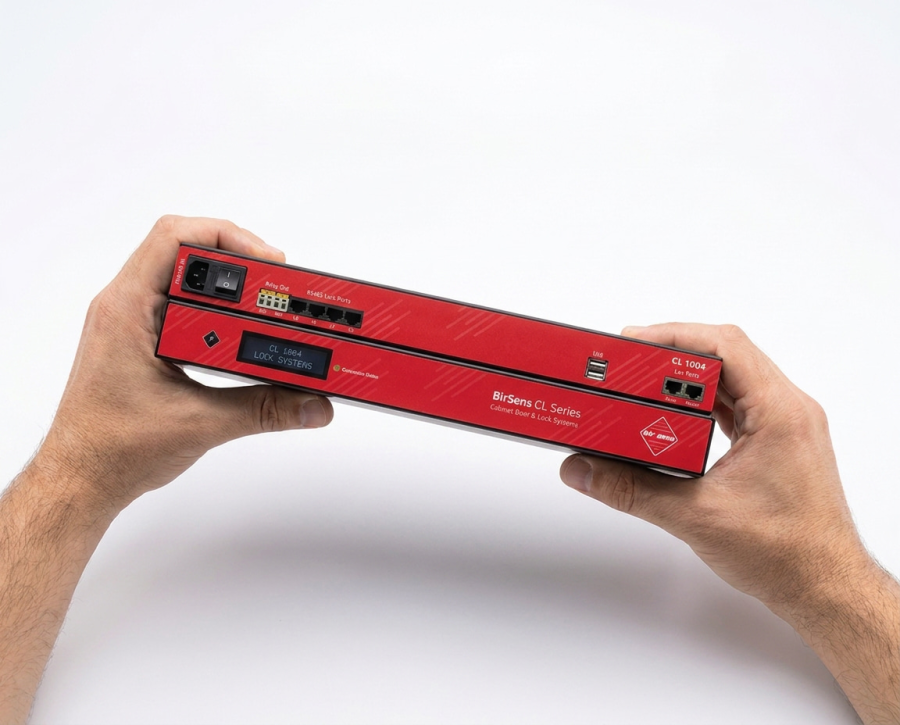
Access control systems digitally record who enters critical areas and with what authorisation. The Birtech ecosystem fully supports card-based access, PIN-based keypads and advanced biometric authentication methods. Whilst the BS-F18 and BS-SC700 access control devices precisely monitor access to the main room, the CL-LOCK RFID cubicle lock provides personalised authorisation at cubicle level. Every access event is recorded with a timestamp based on time, user and authorisation, thereby creating a flawless audit trail for retrospective review.
How the Layers Work Together
When all the layers in the system work together, a complete security chain is established: the access control device unlocks the door, the door sensor confirms that the door has been opened, and the motion-detecting camera records any movement inside with real-time images. In the event of an unauthorised entry attempt—that is, if the door is physically forced open without a card being swiped—the system immediately triggers a high-priority critical alarm.
This multi-layered security system also easily detects dangerous ‘tailgating’ scenarios, where an unauthorised person attempts to gain entry immediately behind an authorised member of staff. Whilst access control records the passage of a single person, if the motion-detection camera detects movement inside indicating the presence of two people, the software immediately converts this discrepancy into a critical security alert. Cross-verification logic makes breaches that a single layer might miss fully visible. The same proactive approach applies at cabinet level: if physical movement is detected in front of the cabin before the cabin lock is unlocked via software, this is reported directly as an unauthorised intervention attempt.
From Motion Detection to Action: Management with Sensaway and Noctua
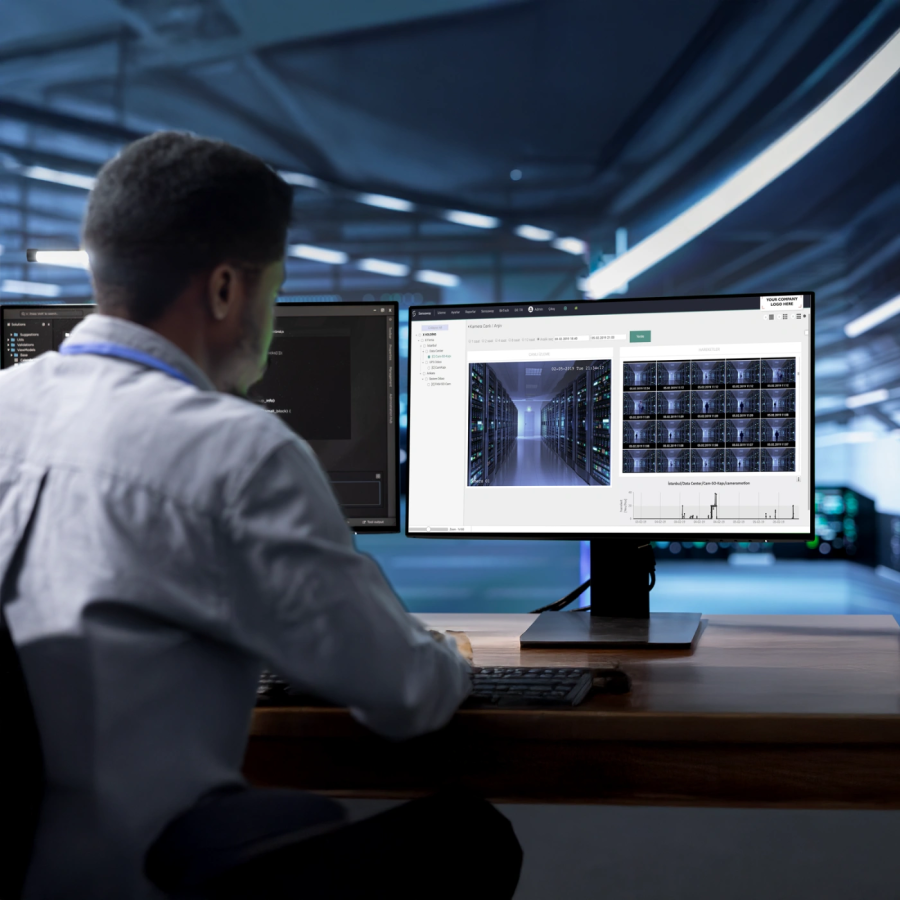
Physical hardware generates raw data on-site; however, the layer that actually analyses this data and turns it into a formal security incident is the central software. Sensaway and Noctua aggregate motion detection data, door statuses and access logs on a single central dashboard and evaluate them end-to-end using threshold-based alarm rules. The software layer successfully carries out four key tasks in this process:
- Incident classification: Whilst routine movements during working hours are logged as standard, all movements outside working hours are automatically escalated to a critical alarm level.
- Multi-channel notifications: Any critical security incidents that arise are communicated to the relevant personnel via email, SMS, automated phone calls, mobile push notifications and on-site siren units.
- Visual verification: Along with the emergency alerts sent, the camera image captured at the exact moment the movement was detected is also forwarded to the authorised person in real time.
- Reporting: All entry and exit logs and movement activities are permanently recorded in official audit reports, complete with time stamps and images.
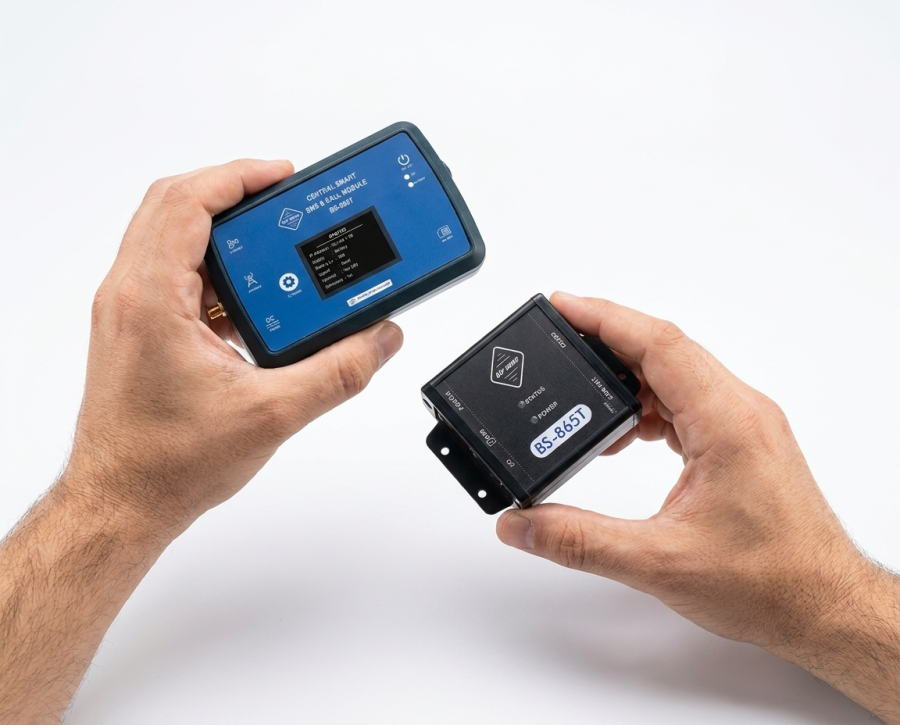
Notification configurations can be flexibly organised at three different levels: system, sensor and user. The principles of remote monitoring and proactive notification management are fully implemented at this level. In critical situations outside working hours, the BS-980T central SMS and call module is activated and contacts the on-duty staff directly by telephone. To prevent misleading and unnecessary alarms (false positives), the data centre utilises the advanced threshold and delay filtering principles set out in the guide to effective alarm rules.
| Risk | Trigger Layer | Monitoring Solution |
|---|---|---|
| Unauthorised Movement Outside Working Hours | BS-CAM motion detection | Critical alerts + email with images + real-time mobile monitoring |
| Unauthorised Entry to a Room | Access control + BS-2023 door sensor | Triggering of a critical alarm the moment the door opens without a card being swiped |
| Intervention to Cabinet | BS-1011 cabinet door sensor + camera | Cabin-based independent access logging + real-time visual verification |
| Leaving the Door Open | BS-2023 Dry Contact (NC) | Automatic alert chain based on the rule ‘remained open for X minutes’ |
| Moving in the Dark | BS-CAM night vision (IR 30 m) | High-resolution video recording in dark or dimly lit environments |
| Need for Evidence | Sensaway / Noctua reporting module | A time-stamped, illustrated and verifiable forensic audit trail |
Frequently Asked Questions
What is the physical security of a server room?
Server room physical security is the process of monitoring, controlling and digitally recording, in real time, physical access to critical rooms, the movement of people within them and any tampering with cabinet doors. Motion detection, door status monitoring and access control form the three key layers of protection in this integrated process.
What is the difference between a PIR motion sensor and a motion-detecting camera?
PIR sensors detect sudden changes in ambient temperature and produce only a simple ‘presence/absence’ signal; they do not provide any visual evidence of past events. Smart cameras with motion detection, meanwhile, digitally detect movement whilst simultaneously recording high-quality video. The Birtech BS-CAM combines detection and visual verification capabilities in a single device, enabling both the immediate detection and legal documentation of incidents.
From how many metres away does the motion sensor detect movement?
The maximum detection and viewing range depends on the device chosen and the technology used. Thanks to its powerful infrared (IR) illumination, the Birtech BS-CAM can produce clear images at distances of up to 30 metres, even in pitch-black conditions. The flexible motion detection area can be easily configured according to the camera’s physical field of view and specific scenario zones defined by the software.
Does a motion-activated camera record continuously?
In the default configuration, which is optimised for server rooms, the camera only captures still images and video when it detects movement in predefined areas and time slots; This helps to prevent the accumulation of unnecessary data. In specific scenarios where uninterrupted video archiving is required, the camera can be integrated into existing NVR (Network Video Recorder) systems and operated to provide continuous 24/7 video recording.
Will the camera integrate with the existing security system?
Yes. The Birtech BS-CAM features a fully standard IP-based architecture and supports PoE power supply; this allows it to integrate seamlessly with existing local networks and NVR recorders on site. Real-time motion events and captured images from the camera are managed from a single central location on the Sensaway and Noctua management platforms, alongside all other environmental sensor and access control data.
Summary and Next Steps
The physical security of server rooms and data centres can only be fully ensured by implementing a multi-layered system comprising motion detection, door status monitoring and access control mechanisms. A single camera or a single door sensor can only provide a small part of overall security. True proactive protection is achieved when digital detection, real-time visual verification and auditable recording mechanisms work together in perfect harmony.
The Birtech ecosystem seamlessly integrates the BS-CAM Motion-Detection IP Camera, the BS-2023 Industrial Door Sensor and professional access control devices under the robust umbrella of the Sensaway and Noctua software suites. You can confidently explore our advanced sensor solutions and modern data centre infrastructure management (DCIM) approaches to proactively manage physical security at your facilities, alongside environmental monitoring processes (temperature, humidity, water leaks, etc.), all from a single centralised platform.