System rooms are digital hubs that keep modern businesses running. Physical security is not limited to blocking unauthorized access. The main threats often come from environmental conditions and power fluctuations that people do not see. Servers, storage units, and network devices work within specific temperature, humidity, and electrical tolerance ranges. When conditions move outside these ranges, systems can fail. Data loss can happen. Hardware damage can become expensive and permanent. A correct sensor setup reduces these risks.
The Role of Environmental Monitoring in Business Continuity
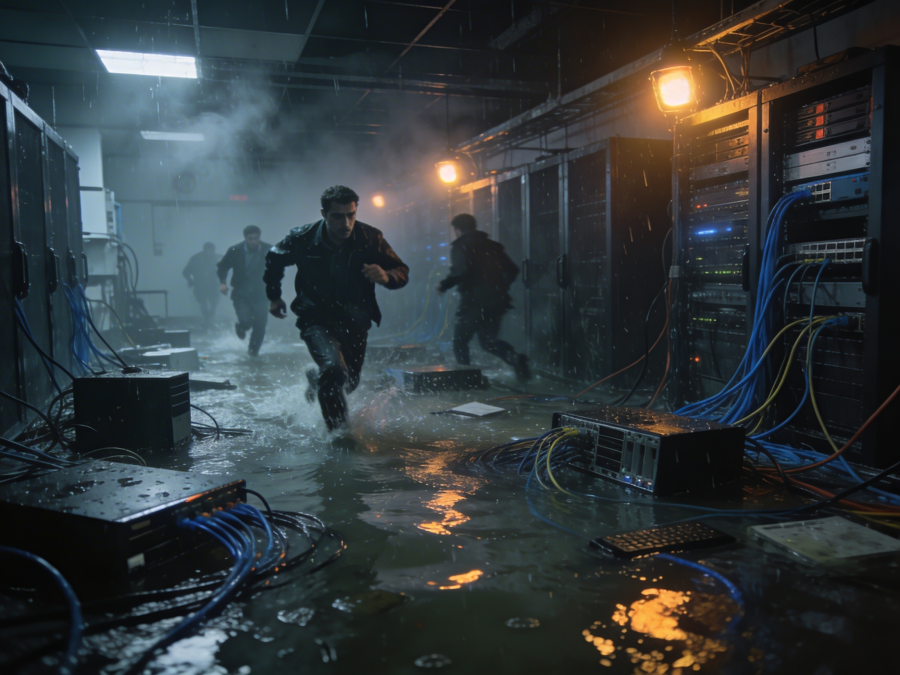
Many unplanned outages in data centers and system rooms start with environmental issues. A cooling unit can fail and raise room temperature to critical levels within minutes. A hidden water leak can damage cables under a raised floor. Environmental monitoring systems support prevention. They alert responsible staff before a small issue becomes an incident. Business continuity needs continuous monitoring.
Sensors That Protect Against Climate and Environmental Threats
Temperature and Humidity Sensor: Protecting Equipment Lifetime
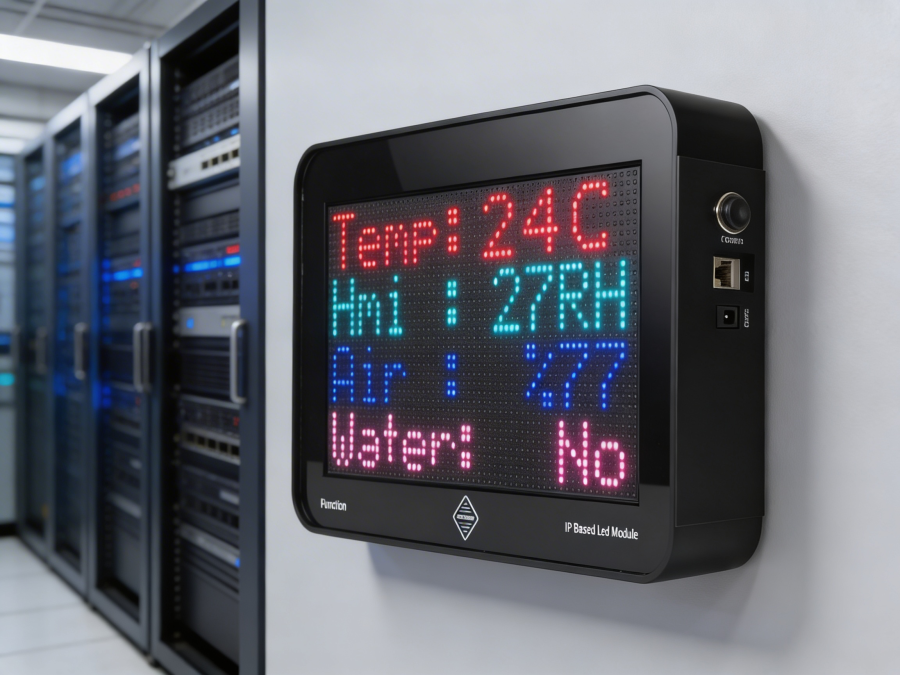
Temperature and humidity tracking is the base of environmental monitoring. International standards such as ASHRAE recommend temperature and humidity ranges for data centers. High temperature increases the risk of CPU overheating. Servers may reduce performance or shut down to protect themselves. Long exposure to heat shortens component life.
Humidity is also critical. High humidity can cause corrosion on metal parts. Circuit boards can oxidize over time and lose conductivity. Low humidity can increase static electricity buildup. Electrostatic discharge can damage sensitive electronic components instantly. Temperature and humidity sensors measure both values continuously and help operators keep the room within safe limits.
Air Quality Sensor: Dust and Particle Risk
Heat control alone is not enough in a modern system room. Airborne particles and gases also create risk. Air quality sensors measure dust, smoke, and chemical particles. Server fans move air continuously for cooling. When dust levels rise, particles enter servers. Heatsinks and fans can clog over time. Clogged airflow reduces cooling efficiency and increases overheating risk. Some conductive dust can support short circuits. Air Quality Sensors also help plan filter replacement and detect early smoke formation before a fire.
Water Leak Sensor: Fast Response and Location Detection
Water leak sensors come in two main types. One type detects leaks at a specific point. Another type uses a rope cable to cover larger areas. Rope sensors can surround pipes or wide zones and detect contact as soon as a leak starts. The system triggers an alarm at first contact. Early warning helps staff remove water before it reaches server racks or power distribution units.
Energy Infrastructure and Power Quality Sensors
Voltage Sensor: Risk from Power Variations
Grid power is not always stable. Sudden voltage drops or increases stress power supplies. Voltage sensors monitor incoming power in real time. UPS units regulate voltage, but grid voltage can reach equipment directly if the UPS enters bypass mode or fails. High voltage can damage capacitors and burn circuits. Low voltage can cause shutdowns and data write errors. Voltage sensors report deviations and help teams trace the source of electrical issues.
Frequency Sensor: Stability of Grid and Generator Output
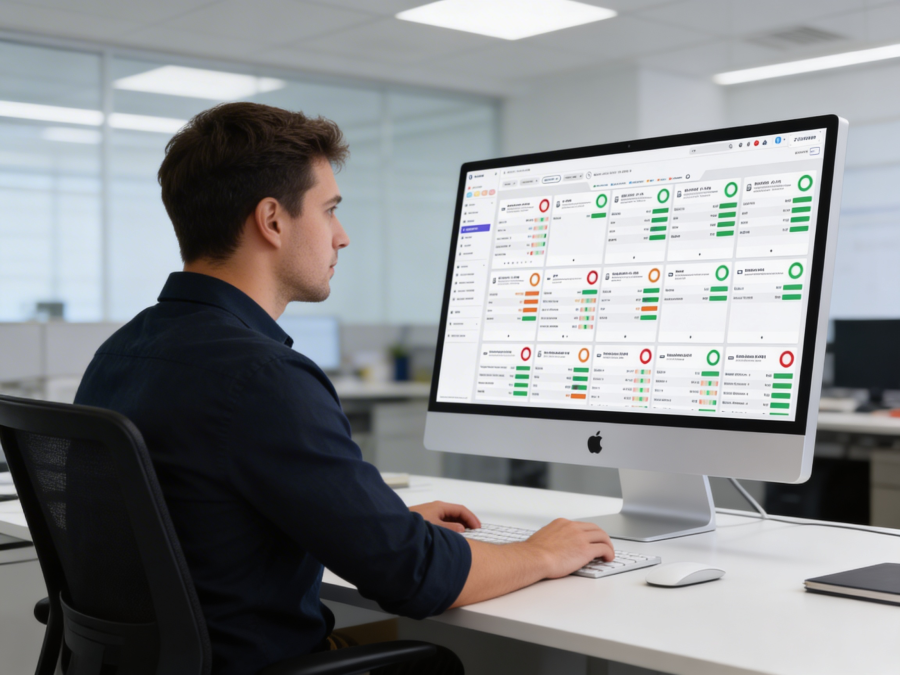
Centralised Management of Sensor Data and Alarm Configuration
According to ASHRAE standards, the recommends 18°C to 27°C for modern data centers. Relative humidity should stay between 40% and 60%
How do voltage fluctuations damage servers?