Remote Monitoring and Notification Management in Environmental Monitoring Systems
09 March, 2026
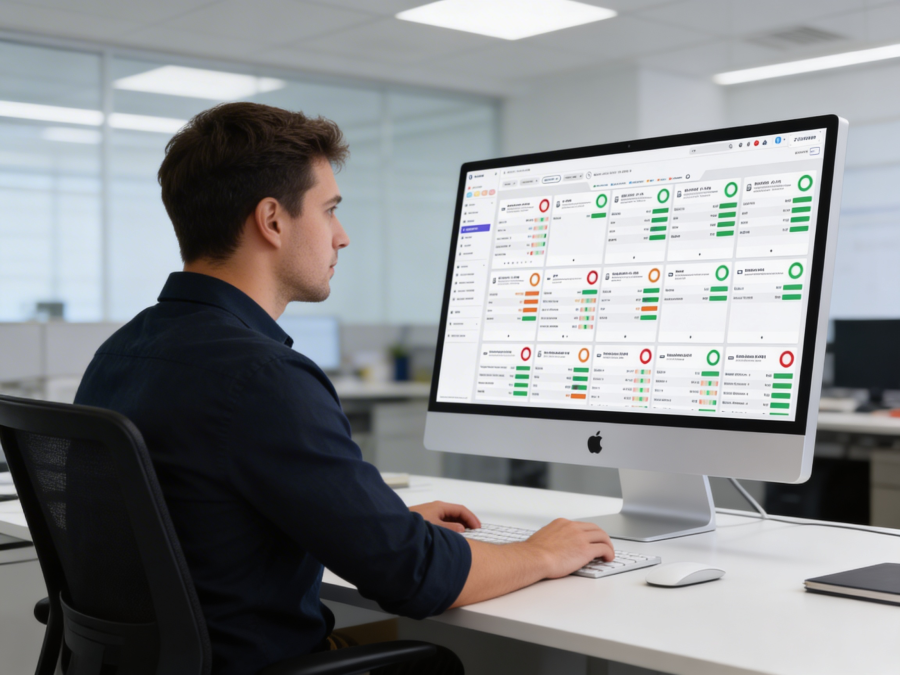
When a fire starts in a data centre or server room, it is not sufficient for the most advanced smoke detector in the environment to detect it. Unless the sensor relays this critical information to the responsible personnel, the disaster scenario will continue to unfold.
DHardware failures and environmental threats typically occur outside of working hours or when system administrators are not at their screens. In the event of a failure, the measure of success is not how quickly you detect the problem, but how quickly you notify the relevant person.
Speed in a Crisis: How to Reduce MTTR (Mean Time to Repair)
One of the key performance indicators in IT operations is the MTTR (Mean Time to Repair) value. This process consists of three stages: Detection, Notification and Intervention. Automation systems complete the "Detection" stage in milliseconds. However, delays during the "Notification" stage extend the total repair time.
Manual controls or only local audible alarms (sirens) depend on staff being present in the room at that moment. Remote monitoring systems, however, send the alarm information directly to the staff's mobile phones. Reducing the notification time from minutes to seconds makes it possible to extinguish a fire before it spreads or reset the air conditioning before the temperature rises.
Technical Comparison of Notification Channels
A single communication channel is not sufficient for effective crisis management. SMS and email are not alternatives to each other, but complementary methods that meet different needs
SMS Notification: GSM Assurance in the Event of an Internet Outage
Network infrastructure failure or power outage are the most critical alarm situations. In such a scenario, the organization’s internet connection (WAN) and email servers may be disabled. Internet-based notifications (e-mail, push notifications) are ineffective in this situation.
SMS integration comes into play here. The external or internal GSM module on the device operates independently of the local network. Even if the power is cut off, the system, powered by the UPS, sends a "Power Cut" message using the GSM network. SMS is the most reliable channel for critical and urgent situations requiring immediate intervention (fire, flooding, power outage).
Email Notification: Detailed Reporting and Record Keeping
Email notifications offer richer content compared to SMS. An alarm system can send real-time status graphs, sensor values at the time of the event, and detailed log records via email. Email is used more for "Information" and "Analysis" purposes. For example, the email service is ideal for analysing a trend where the temperature is slowly rising or for receiving the system's weekly status report.
|
Feature |
SMS Notification |
E-mail Notification |
|
Communication Speed |
Very High (3-5 sec) |
Variable (Depending on server load) |
|
Addiction |
GSM Network |
Internet and Mail Server |
|
Content Details |
Short Text (160 Characters) |
Graph, Log, Additional File |
|
Intended Use |
Emergency / Crisis |
Reporting / Recording |
|
Cost |
Requires an SMS package |
Usually Free |
Configuration Strategies for Effective Alarm Management
Escalation Rules
- Level 1: When an alarm is triggered, an SMS is sent to the field technician.
- Waiting: The system checks whether the problem has been resolved for 10 minutes.
- Level 2: If the issue persists or the technician has not provided a "Received" confirmation, an SMS and email will be sent to the IT Manager.
- Level 3: When the critical time is exceeded, an emergency call is made to the Facility Manager
This method ensures responsibility is shared and guarantees that senior management is only informed of crises that cannot be resolved.
Threshold Values and False Alarm Management
Sensor data sometimes shows momentary fluctuations. For example, if the system room temperature limit is 25°C, the temperature rising to 25.1°C and then dropping to 24.9°C seconds later will cause a continuous alarm. To prevent this, the hysteresis setting is used.
The command "Start the alarm at 25°C, but do not turn off the alarm until the temperature drops to 23°C" is given to the system. Additionally, false alarms are filtered by defining time delays such as "The threshold value must be exceeded for at least 60 seconds" for the alarm to be triggered.
The Contribution of Integration and Automation to Business Continuity
Modern environment monitoring software minimises the human factor. It does not merely send notifications, but also takes action according to defined scenarios. Relay outputs that activate the backup air conditioning when the temperature rises, or automation systems that close the main valve when water leakage is detected, are part of the notification management system.
Multi-User Identification and Shift Management
Although data centres operate 24/7, staff work in shifts. The notification management module can be programmed according to users' working hours.
● Weekdays 09:00 - 18:00: Send an email to the day shift team.
● Weekdays 18:00 - 09:00: Send an SMS to the on-duty staff.
● Weekend: Send an SMS to the entire technical team and manager.
Frequently Asked Questions (FAQ)
If the internet connection is lost, can the remote monitoring system send notifications?
Yes, it can send messages if the system has a GSM module (SIM card slot). Even if the internet connection (Ethernet/Wi-Fi) is lost, the device will send an SMS via the GSM network to report the outage. This feature is critical for full protection.
Is an external GSM modem required for SMS integration?
Some environmental monitoring devices have a built-in GSM modem; you only need to insert a SIM card. In models without an internal modem, external GSM modems can be integrated via USB or the RS-232 port.
Yes, advanced monitoring software has a "Scheduler" feature. Which user will receive notifications on which days and at what times can be defined in detail.
The "Delay Time" and "Hysteresis" (Tolerance Range) must be defined for the sensor threshold values. For example, the rule "Trigger an alarm if the temperature limit is exceeded for 30 seconds" prevents momentary deviations from generating false alarms.
Yes, user groups can be created within the system. In the event of an alarm, both SMS and email messages can be sent simultaneously to the 10 members of the "Technical Team" group.