Environmental Monitoring
What is an Environmental Monitoring System? Why Should Your Business Be Monitored 24/7?
17 February, 2026

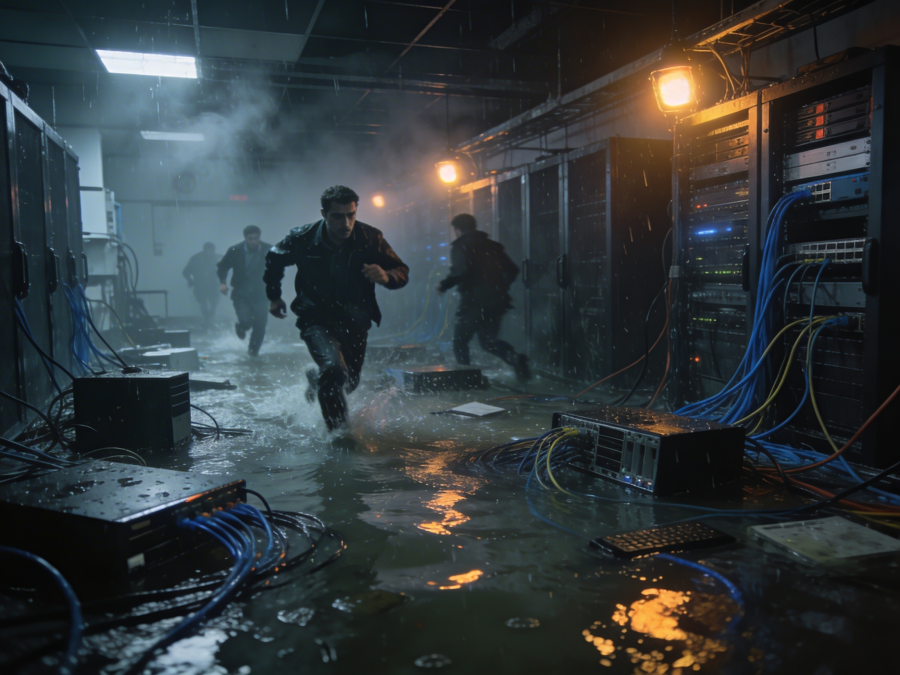
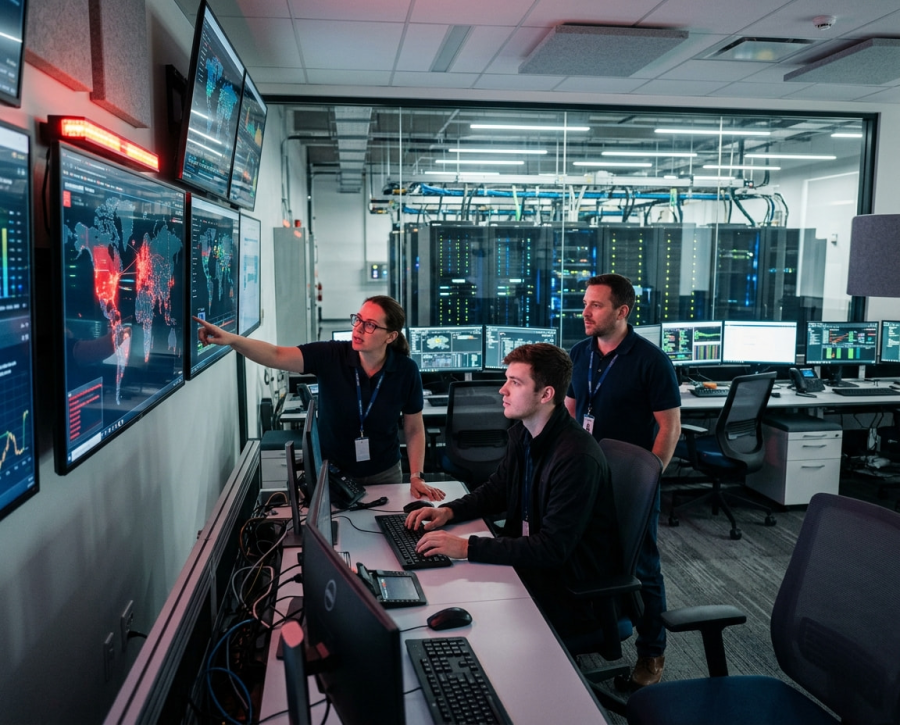
Data centre disasters rarely occur when everyone is in the office. Critical failures often arise in the middle of the night, at weekends, or during public holidays. Your IT infrastructure worth millions of pounds, your customer data, and your operational capacity are at significant risk when no one is physically present. Many business owners believe that locking the server room door is sufficient security. However, a locked door cannot stop rising temperatures, a burst water pipe, or fluctuating voltage inside. An environmental monitoring system is your business's insurance policy against these invisible threats. This technology offers a proactive shield of protection rather than a reactive approach. It continuously monitors the physical conditions in your server room and alerts you in the event of a crisis.
Environmental Monitoring System: Not Just a Sensor, but a Management Platform
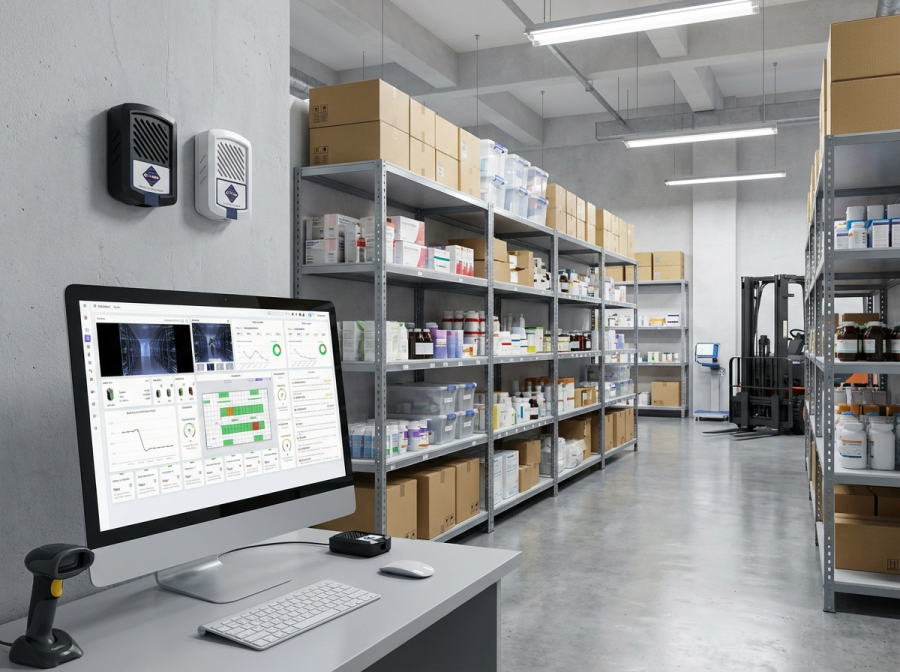
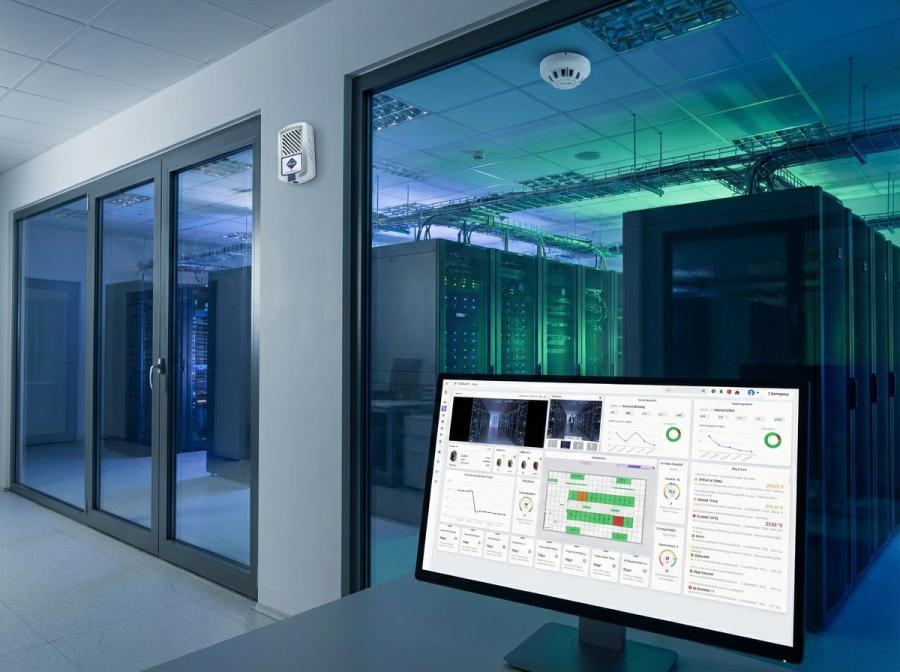
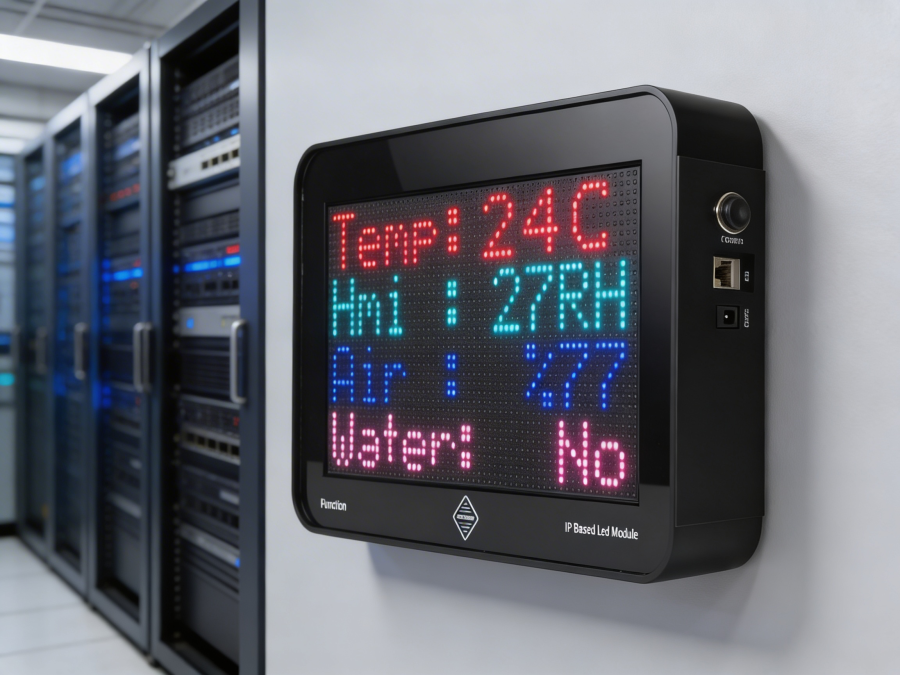
An environmental monitoring system is not limited to a single thermometer or smoke detector. This structure is an integrated management platform that detects critical variables in the environment (temperature, humidity, air flow, water, energy, movement), processes this data, and converts it into meaningful alerts.
The system essentially consists of three layers:
- End Units: Sensitive sensors that collect data.
- Base Unit: The central hardware that processes data and makes decisions.
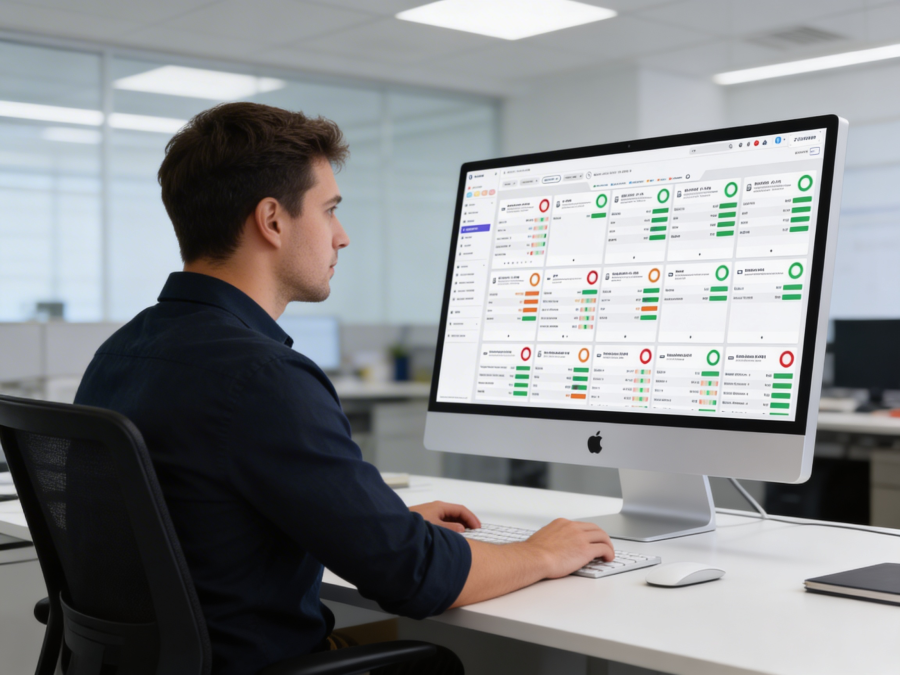
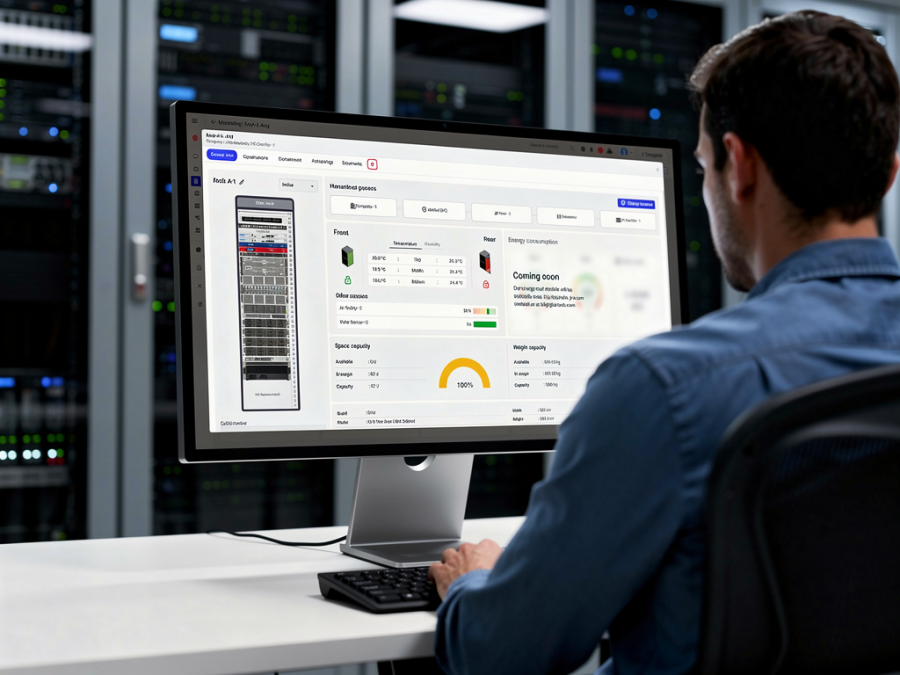
- Software Interface: The management panel where the user monitors data, generates reports, and defines alarm rules.
This integrated structure acts as the "digital guardian" of your IT infrastructure. It detects any situation that deviates from the defined standards in a matter of seconds, leaving no room for human error.
Why 24/7 Monitoring? The Cost of Invisible Risks
IT infrastructure hardware is designed to operate under specific environmental conditions. Any disruption to these conditions can lead to costly consequences, ranging from hardware failures to data loss.
Critical Failures Occurring Outside Working Hours
Assume that; when you leave the office on Friday evening, the air conditioning in the server room is working. However, a compressor failure in the middle of the night will raise the room temperature above 40°C within minutes. Servers will first reduce their performance in this heat, then shut down to protect themselves. If cooling cannot be restored, the processors and disks will suffer permanent physical damage.
Arriving at the office on Monday morning to find melted cables and a halted operation is the worst-case scenario for any business. The 24/7 monitoring feature alerts you the moment your air conditioning stops. It allows you to direct technical support from home before the problem escalates into a disaster. The response time is always cheaper than the cost of hardware recovery.
Record-keeping Obligation for Insurance and LPPD Compliance
Data security encompasses not only cyber attacks but also physical security. Standards such as LPPD and ISO 27001 require that the physical security of the environments where data is stored be ensured and monitored. In the event of potential data loss or fire, insurance companies investigate the cause of the damage.
Historical temperature, humidity and energy reports prove that your business has taken the necessary precautions. The environmental monitoring system records this data permanently. It is your strongest evidence during inspections or damage compensation processes.
The System's Basic Components and Working Principle
A modern monitoring system can be adapted to businesses of all sizes thanks to its modular structure.
Data Collection with Smart Sensors (Temperature, Humidity, Water, Energy)
- The sense organs of the system are sensors. Different sensor types are integrated into the system as required:
- Temperature and Humidity Sensors: Detect when servers are operating outside their working range.
- Water Leakage Sensors: Detect leaks from air conditioning drainage or building plumbing systems the moment they come into contact with the floor.
- Energy Analyzers: Monitors voltage fluctuations and power outages. Reports UPS battery status.
- Air Quality Sensors: Detect pre-fire smoke or filter clogging by measuring dust and particle density.
Central Management Software and Remote Access
Data from the sensors is transmitted to the central software via the main unit. This software can be a web-based interface or a mobile application. Managers can view the real-time status of the system room from anywhere in the world. The software enables trend analysis by converting data into graphs. For example, by seeing when the temperature rose over the past month, the cooling strategy can be optimised.
Disaster Prevention Feature: Instant Notification and Alarm Management
The most vital function of a monitoring system is to alert the right person at the right time. It is not always possible to look at the screen and monitor the graphs. The system operates on the principle of "exception management". It remains silent when everything is fine, but takes action when a risk arises.
Users set lower and upper threshold values for each sensor (e.g. if the temperature exceeds 28°C, an alert is triggered). When this threshold is exceeded, the system activates a predefined alarm scenario:
- Email: Sends the detailed technical report to the relevant group.
- SMS: An instant alert message pops up on the IT manager's mobile phone.
- Audible Siren/Light: It alerts personnel in the system room or security desk audibly and visually.
- Automation: Advanced systems can automatically activate the backup air conditioning when the temperature rises or shut down non-critical servers.
Return on Investment (ROI): A Single Failure vs. System Cost
Businesses facilities sometimes view environmental monitoring systems as an "extra cost". However, the mathematical reality is different.
A single server failure, data recovery service, new hardware costs and, most importantly, labour loss (downtime) outweigh the investment in a monitoring system many times over.
An environmental monitoring system pays for itself even if it prevents just one accident. Protecting your business's reputation, customer trust and operational assets is not a luxury, it is a necessity. Installing this system means securing the future of your business.
Frequently Asked Questions (FAQ)
How long does it take to set up an environmental monitoring system?
The installation time varies depending on the size of the area to be monitored and the number of sensors. For an average system room, basic installation and software configuration are usually completed within one day. Wireless sensor options further reduce the installation time.
The installation time varies depending on the size of the area to be monitored and the number of sensors. For an average system room, basic installation and software configuration are usually completed within one day. Wireless sensor options further reduce the installation time.
If the power goes out, will the monitoring system continue to operate?
Yes, professional systems are usually powered by a UPS (Uninterruptible Power Supply) or have an internal battery. In the event of a power outage, the system does not shut down and alerts you to the situation by sending a "Mains power lost" alarm.
Yes, professional systems are usually powered by a UPS (Uninterruptible Power Supply) or have an internal battery. In the event of a power outage, the system does not shut down and alerts you to the situation by sending a "Mains power lost" alarm.
Can alarm notifications be sent to more than one person?
Certainly. A hierarchical structure can be established for alarm scenarios. A step-by-step scenario can be designed whereby notifications are sent first to the system administrator, then to the IT manager if no response is received, and finally to the facility manager.
Certainly. A hierarchical structure can be established for alarm scenarios. A step-by-step scenario can be designed whereby notifications are sent first to the system administrator, then to the IT manager if no response is received, and finally to the facility manager.
Does the system provide historical temperature reports?
Yes, the system stores sensor data in its own memory or on the server. You can select the desired date range to obtain graphical reports of temperature, humidity and other data, and export them in PDF or Excel format..
Yes, the system stores sensor data in its own memory or on the server. You can select the desired date range to obtain graphical reports of temperature, humidity and other data, and export them in PDF or Excel format..
Which package is suitable for a small server room?
Compact Packages are ideal for small rooms with only 1-2 cabinets. Basic sets, which typically include 1 temperature-humidity sensor, 1 water leak sensor and power failure monitoring, are sufficient and economical for ensuring the safety of small businesses.
Compact Packages are ideal for small rooms with only 1-2 cabinets. Basic sets, which typically include 1 temperature-humidity sensor, 1 water leak sensor and power failure monitoring, are sufficient and economical for ensuring the safety of small businesses.