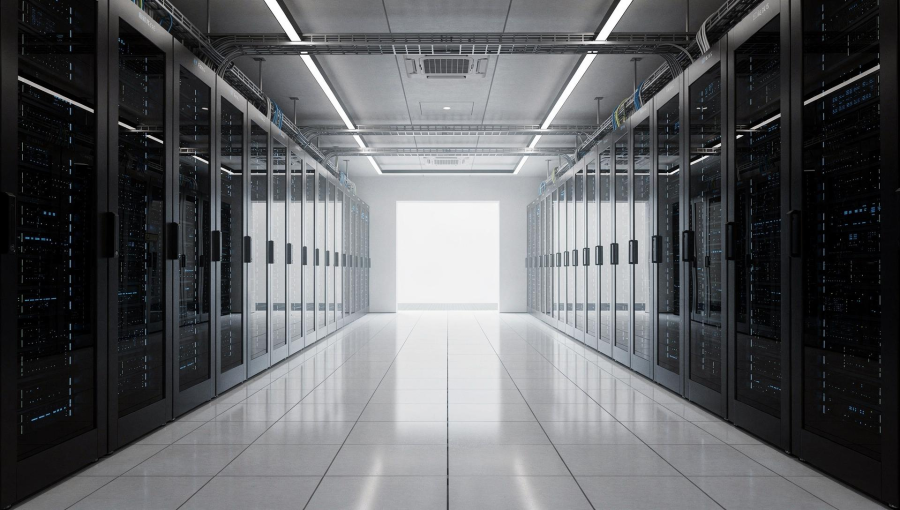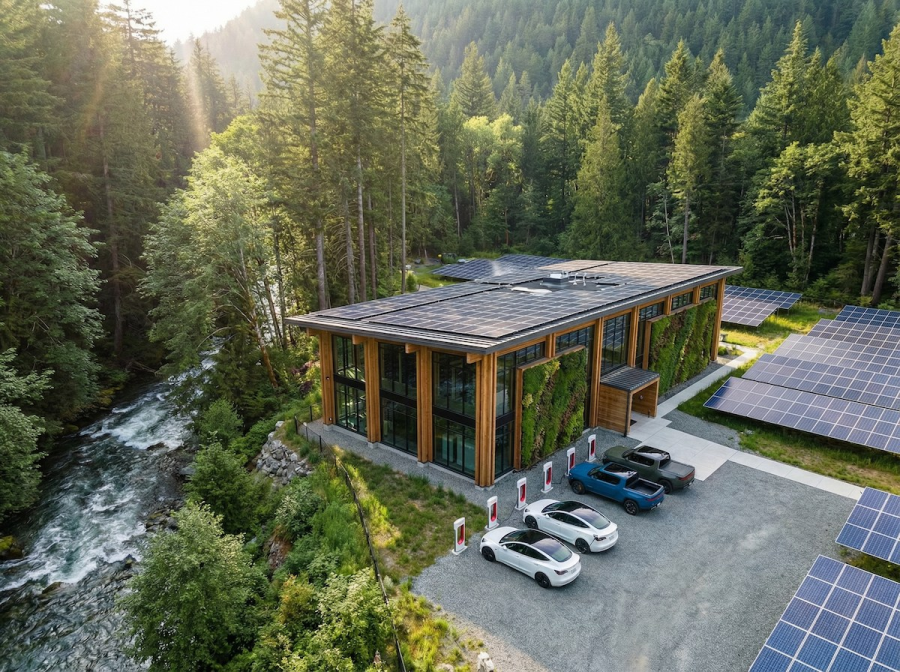
Every bit of data produced in the digital world has a physical energy equivalent. Every email sent, every file stored and every server run consumes electricity. The global increase in energy costs is driving IT managers towards efficiency-focused strategies. Green IT is an engineering discipline that aims to minimize energy costs, going beyond environmental awareness. This approach covers all processes, from hardware production to data centre design, operational management to e-waste recycling.
Establishing a sustainable data center does not merely mean protecting nature. It also means reducing the company's operational expenses (OPEX) and enhancing its competitive edge.
The Concept of Green IT: The Environmental Cost of Digital Transformation
Key Performance Indicator: PUE (Power Usage Effectiveness)
To understand how "green" a data Centre is, measurable metrics are required. The most important metric, accepted as the industry standard, is the PUE (Power Usage Effectiveness) value. Developed by The Green Grid consortium, these metric scores the facility's energy efficiency.
Ideal PUE Value and Calculation Method
The PUE is calculated by dividing the facility's total energy consumption by the energy consumed by IT equipment (servers, storage, network).
Formula: PUE = Total Facility Energy / IT Equipment Energy
The ideal PUE value is 1.0. This value indicates that all electricity entering the facility is used solely for the IT workload, with no extra energy expended on cooling or lighting (theoretically impossible, but this is the target).
- PUE 2.0: Inefficient. For every 1 unit of IT energy consumed, 1 unit is also spent on cooling/lighting.
- PUE 1.5: Average productivity..
- PUE 1.2 and below: Highly efficient (Green Data Centre).
What is DCIE (Data Centre Infrastructure Efficiency)?
DCIE (Data Center Infrastructure Efficiency), Pis the inverse of the PUE value and is expressed as a percentage. Formula: DCIE = (IT Equipment Energy / Total Facility Energy) x 100
The higher the DCIE value, the more efficient the data centre is. For example, a DCIE value of 50% corresponds to a PUE of 2.0 and indicates that half of the energy is spent on infrastructure support (cooling, UPS losses, etc.).
Scenario Analysis: The Impact of PUE Value on Energy Costs
|
PUE Value |
Efficiency Class |
IT Load (Fixed) |
Infrastructure and Cooling Consumption (Waste) |
Total Energy Consumption |
DCIE (Efficiency) |
|
2.5 |
Very Low / Outdated Technology |
100 kW |
150 kW |
250 kW |
%40 |
|
2.0 |
Average Standard |
100 kW |
100 kW |
200 kW |
%50 |
|
1.5 |
Productive (Efficient) |
100 kW |
50 kW |
150 kW |
%67 |
|
1.2 |
Green Data Centre (Green IT) |
100 kW |
20 kW |
120 kW |
%83 |
Table Interpretation: Table Interpretation: As shown in the table, reducing the PUE value from 2.0 to 1.5 will save 25% on your total energy consumption, even if your IT hardware remains unchanged (A drop from 200 kW to 150 kW). When PUE reaches 1.2, an 80% saving is achieved in energy spent on cooling and infrastructure compared to a PUE of 2.0. This translates to a significant cost advantage on your annual electricity bill.
Infrastructure Strategies for a Sustainable Data Centre
Significant changes in physical infrastructure and management approach are required to bring the PUE value closer to 1.0.
Cooling Optimization: Hot/Cold Aisle and Free Cooling
Cooling systems are the largest component of non-IT energy consumption. The traditional approach of "set the room to 18 degrees" is a significant waste of energy.
Hot/Cold Aisle: Cabinets are arranged with cold air inlets facing each other. Cold air is contained using cold aisle containment systems. This prevents the mixing of cold air with the heated exhaust air. This method increases cooling efficiency by up to 30%.
● Free Cooling: When the ambient temperature is lower than the data Centre temperature, outside air is used instead of compressor-based cooling. Many regions of Turkey are suitable for Free Cooling for a significant part of the year. This technology drastically reduces your electricity bill.
1. Fewer physical servers are required.
2. Fewer devices are cooled.
3. Data centre space (square meters) is used more efficiently.